Introduction
Commercial construction in Dubai moves at an unforgiving pace. Multi-storey office towers, shopping malls, and mixed-use developments demand precision, speed, and the right machinery from day one. Without proper equipment planning, projects accumulate costly delays, safety incidents, and budget overruns.
The question isn’t whether you need construction machinery—it’s whether you’ve selected the right equipment for your specific project requirements. Dubai’s construction landscape is unique. High-rise developments, dense urban sites, and demanding weather conditions require equipment that’s not just available, but optimally matched to your project phase and site constraints.
This guide walks you through the essential equipment categories used in commercial construction across Dubai and the UAE, explains when and why each type matters, and helps you make equipment decisions that keep projects on track and within budget.
Understanding Your Project’s Equipment Needs
Before renting or purchasing equipment, understand your project’s distinct phases. Commercial construction equipment requirements shift dramatically from site preparation to foundation work, structural erection, and finishing stages.
Each phase demands different machinery combinations. Attempting to use the same equipment setup for excavation that you’d use for concrete pouring creates inefficiencies—and can actually slow progress or damage partially completed work.
The best-run projects plan equipment needs 4–6 weeks in advance. This allows time to secure reliable machinery, arrange logistics, and train operators familiar with Dubai’s specific site conditions and regulatory requirements.
Site Preparation and Earthmoving Equipment
Excavators: The Foundation of Site Work
Excavators are the foundation of any commercial construction project. In Dubai, 20-30 tonne excavators handle most site preparation tasks effectively, though larger projects may require 30-50 tonne models.
Excavator selection depends on your site’s soil composition and depth. Dubai’s sandy soil requires different excavation techniques than clay-heavy areas outside the city. Standard excavators work well for general earthmoving, but compact or mini excavators (8-15 tonnes) are essential when working in confined spaces—particularly common in urban Dubai developments where neighbouring buildings limit access.
Practical consideration: Many contractors underestimate trenching requirements for underground utilities (water, electrical, telecom). Plan additional excavator time specifically for utility coordination. A single day’s delay waiting for utilities often stems from inadequate trenching equipment allocation.
Bulldozers and Graders
Bulldozers handle heavy soil movement and site leveling. In commercial projects, they’re typically deployed during initial site preparation and again during final grading before concrete foundation work.
Motor graders create precise surface finishing, essential for commercial building sites where foundation tolerances are tight. Graders with GPS guidance systems improve accuracy and reduce the need for repeated passes—particularly valuable on large foundation areas.
Compaction and Stabilization Equipment
Properly compacted soil prevents foundation settling and structural issues years later. Commercial building foundations demand consistent, certified compaction across the entire site.
Road rollers (vibratory compactors) compress large areas systematically. Plate compactors handle smaller zones and confined spaces. The choice between static and vibratory equipment depends on soil type and required compaction depth. Dubai’s sandy soils typically respond well to vibratory equipment, though site-specific soil testing should guide your selection.
Material Handling and Lifting Equipment
Tower Cranes: Vertical Construction Workhorses
Tower cranes define commercial construction in Dubai’s skyline. These stationary cranes provide consistent, heavy lifting throughout the project lifecycle—from structural steel erection to material delivery at height.
Tower crane selection balances three factors: lift capacity (typically 10-20 tonnes for standard commercial buildings), hook height, and outreach. Dubai’s high-rise developments often use cranes with 50+ metre hook heights. Site footprint constraints may require climbing cranes that reduce ground space but increase operational complexity.
Critical detail: Tower crane setup requires 3–5 days. Factor this into project schedules, and ensure electrical infrastructure supports the significant power demands.
Mobile Cranes
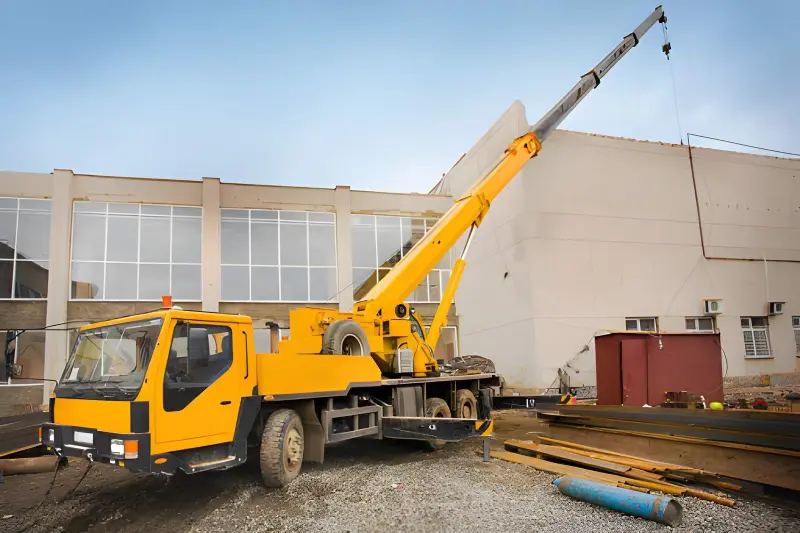
Mobile cranes (truck-mounted or all-terrain) complement tower cranes. They excel at:
- Unloading delivery vehicles during early project phases
- Lifting equipment that tower cranes can’t reach
- Site-specific tasks in areas away from the main structure
25-40 tonne mobile cranes handle most commercial construction scenarios. Larger models (50+ tonnes) are reserved for specialized lifts requiring engineering certification.
Telehandlers and Boom Lifts
Telehandlers (boom lifts) are versatile workhorses on commercial sites. They move materials, position equipment, and support concrete finishing at multiple building levels. A 3-4 tonne telehandler becomes nearly indispensable during finishing stages.
Scissor lifts and articulating boom lifts handle interior finishing, cladding installation, and mechanical/electrical work. Unlike tower cranes, these mobile platforms allow workers to carry tools and materials to precise locations, reducing manual handling and improving productivity.
Concrete and Foundation Equipment
Concrete Pumps
Concrete pumping eliminates manual pouring for commercial buildings. Truck-mounted pumps (21-35 metres reach) work for low-rise and mid-rise structures, while static pumps with pipeline systems serve high-rise concrete work.
Concrete pump selection depends on vertical reach, volume requirements per hour, and pipeline accessibility. Dubai’s densely built commercial zones often require working around existing structures—another reason to plan concrete delivery logistics well in advance.
Concrete Mixers
On-site concrete mixers provide flexibility for minor repairs, finishes, and grouting work. Commercial projects typically employ 350-500 litre capacity mixers to support concrete specialist teams separate from main building delivery.
Vibrators and Finishing Equipment
Internal vibrators compact concrete in columns, beams, and foundations. External formwork vibrators create smooth finish surfaces. Surface vibrators and screeds level concrete slabs during floor pours—critical for large open-plan commercial spaces where tolerance variations become visible.
Power and Compressed Air Equipment
Diesel Generators
Commercial construction in Dubai requires reliable backup power. Generating capacity depends on simultaneous equipment operation and site activities.
A typical commercial site uses 100-200 kVA generating capacity. High-rise projects with significant crane and pump power demands may require 250+ kVA. Ensure generator location minimizes noise impact on neighbouring occupied buildings—an often-overlooked compliance requirement in urban Dubai.
Air Compressors
Pneumatic tools—impact drivers, nail guns, air hammers—are standard on commercial sites. Most projects run 50-75 CFM (cubic feet per minute) capacity compressors. Larger projects supporting multiple tool stations may use 100+ CFM systems.
Compressed air quality matters. Adequate filtration prevents damage to pneumatic tools and reduces maintenance downtime.
Safety and Site Equipment
Mobile Elevated Work Platforms (MEWPs)
MEWP regulations in Dubai are specific and enforceable. Boom lifts, scissor lifts, and vertical mast lifts allow safe access at height for cladding, mechanical installation, and finishing work. Projects must ensure MEWP operators hold current certifications and that equipment passes regular inspections.
Temporary Site Infrastructure
Fencing, hoarding systems, and site office containers aren’t machinery, but they’re essential equipment for commercial building sites in residential or busy commercial areas. Proper hoarding protects public safety and controls site access—required by Dubai Municipality for projects over 50 square metres.
Equipment Rental vs. Purchase Decisions
For most commercial construction projects, renting equipment makes financial sense compared to purchasing.
Purchasing equipment ties up capital, requires maintenance infrastructure, and creates storage and insurance obligations. Equipment utilization on individual projects rarely justifies ownership unless your company runs simultaneous multiple projects or specializes in equipment leasing.
Renting provides:
- Flexibility to adjust equipment as project phases change
- Predictable costs through fixed rental agreements
- Maintenance responsibility with the rental provider
- Access to updated equipment without depreciation risk
Calculate your equipment costs using: (Monthly rate × Project duration) + Delivery/setup fees. Compare this to long-term financing costs and maintenance for purchased equipment. Most commercial contractors find 6-month+ rental periods economical with established equipment rental partners.
Equipment Selection for Dubai’s Unique Conditions
Heat and Weather Considerations
Dubai’s extreme summer temperatures (45–50°C) affect equipment performance. Engines require additional cooling capacity. Hydraulic fluid demands careful management—overheating reduces viscosity and damages seals.
Equipment with climate control systems or additional cooling capacity proves valuable during May–September. Budget rental premiums for climate-optimized machinery if your project runs through summer months.
Sandy Soil Challenges
Dubai’s foundation sand differs significantly from clay-heavy soils elsewhere. Sandy soils:
- Compact differently (require specific vibration frequencies)
- Settle more unpredictably (demand tighter specification tolerances)
- Interact uniquely with piling equipment (if deep foundations are required)
Select equipment providers who understand Dubai’s specific soil conditions. Experienced rental companies can recommend equipment configurations proven effective in similar projects.
Common Mistakes in Equipment Planning
- Underestimating delivery and setup time Equipment isn’t always immediately available. Peak construction seasons (October–April) create rental shortages. Plan equipment procurement 4–6 weeks ahead.
- Mismatching equipment to project phases Using foundation-stage equipment during finishing work creates inefficiency. Plan phase-specific equipment transitions.
- Ignoring operator availability Equipment is useless without trained, certified operators. Confirm operator availability alongside equipment rental.
- Overlooking compliance requirements Cranes, MEWPs, and pressure equipment require inspections and certifications. Non-compliance creates project shutdowns and liability.
- Failing to account for site logistics Confined urban sites need smaller equipment with higher precision. Large open sites can accommodate bigger, more cost-effective machinery.
Best Practices for Equipment Management
Plan systematically: Create a detailed equipment schedule 4–6 weeks before each project phase begins. Coordinate with your project timeline to avoid idle time.
Build relationships with rental providers: Established partnerships with reliable equipment companies improve access during peak seasons and often result in better pricing on volume commitments.
Prioritize operator training: Invest in certified, experienced operators. Equipment productivity depends entirely on operator skill and familiarity with specific machinery.
Conduct regular inspections: Daily equipment checks prevent unexpected breakdowns. Establish responsibility clearly—operator or site supervisor—for pre-shift equipment verification.
Document fuel and maintenance: Track fuel consumption and maintenance intervals. This data helps forecast future project costs and identify efficiency improvements.
Plan equipment transportation: Delivery logistics often get overlooked. Confirm delivery routes, site access points, and unloading areas before equipment arrives.
FAQ Section
Q1: What’s the typical equipment cost for a commercial office building in Dubai? Equipment costs vary dramatically based on project size and duration. A 5-storey office building typically budgets AED 500,000–1,500,000 for equipment rental across 12–18 months. Larger projects or those using specialized equipment can exceed this significantly. Request detailed quotes from multiple rental providers based on your specific project timeline.
Q2: How far in advance should I arrange equipment rental? Plan equipment procurement 4–6 weeks before each project phase. During peak seasons (October–April), establish equipment requirements 8–12 weeks ahead to secure availability.
Q3: Are MEWP certifications required in Dubai? Yes. All MEWP operators must hold current certifications. Equipment must pass regular safety inspections. Non-compliance results in project shutdowns and potential fines.
Q4: What happens if equipment breaks down during a project? Established rental companies provide backup equipment or emergency repairs. Define response times and backup provisions in your rental agreement before equipment deployment.
Q5: Can we rent smaller equipment and work longer rather than renting larger, more expensive equipment? Sometimes, but not always. Calculate total project cost (equipment + labour hours). Smaller equipment extends timelines and increases labour costs—often negating rental savings. Larger equipment may deliver better overall economics.
Q6: What equipment is essential during site preparation vs. structural stages? Site preparation prioritizes excavators, bulldozers, and compaction equipment. Structural stages emphasize cranes, concrete equipment, and lifting machinery. These phases often overlap, requiring both categories simultaneously during transition periods.
Q7: Do rental companies handle equipment transportation to the site? Most do, though transportation costs are separate from rental fees. Confirm whether delivery, setup, and collection are included or billed separately before finalizing agreements.
Q8: What’s the difference between renting and hiring equipment on a daily vs. monthly basis? Daily rates typically run 8–12% of monthly rates. For projects lasting 2+ weeks, monthly agreements deliver better economics. Negotiate fixed rates for multi-month commitments.
Best Practices Summary
Successful commercial construction equipment management combines three elements:
- Early planning: Establish equipment needs 4–6 weeks before deployment
- Site-specific selection: Match equipment to Dubai’s unique soil conditions and urban constraints
- Operator excellence: Prioritize certified, experienced equipment operators
Equipment decisions directly impact project timelines, budgets, and safety outcomes. The lowest-cost equipment rental often isn’t the most cost-effective choice when you factor in project delays, inefficiency, and safety incidents.
Conclusion
Commercial building construction in Dubai demands equipment that’s not just available—it’s optimally selected for your project’s specific requirements, timeline, and site conditions. From site preparation through finishing stages, each project phase requires different machinery combinations.
The most successful contractors plan equipment logistics as carefully as they plan design and financing. This approach prevents delays, controls costs, and maintains safety standards.
Whether you’re managing a mid-rise office development, shopping mall, or mixed-use complex, equipment rental provides the flexibility and cost-efficiency commercial projects demand. The key is starting the planning process early and partnering with rental providers who understand Dubai’s unique construction environment.
Ready to plan equipment for your next commercial project? Contact our team to discuss your project requirements. We’ll help you select the right equipment combination, confirm availability, and arrange delivery on your timeline. Contact us today to get started.