Construction Equipment Delivery Planning in Dubai: Access, Timing and Site Readiness
Construction equipment delivery planning in Dubai involves more than arranging a truck and confirming a delivery date. Before machinery arrives, the project team needs to establish that the delivery route is suitable, the site entrance is accessible, the unloading area is ready, and the equipment matches the work planned for that stage of construction.
A backhoe loader may be practical for a small site requiring both digging and loading, while a dedicated excavator may be more suitable for sustained excavation or trenching. However, even the right machine can cause delays if it cannot reach the work area, be unloaded safely, or operate within the available space.
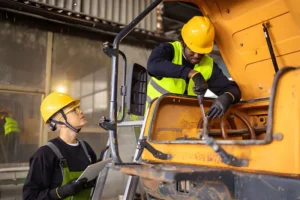
For contractors, MEP teams, facility managers, and procurement professionals, the most useful approach is to coordinate equipment selection, delivery access, site readiness, and rental timing before confirming mobilization. This helps reduce avoidable waiting, unsuitable deliveries, and interruptions to planned work.
This guide explains how to prepare a construction site for equipment delivery in Dubai, what information to confirm with a rental provider, and how to choose between a backhoe loader, mini excavator and larger excavator when site preparation is involved.
1. What should you check before arranging construction equipment delivery?
Before booking equipment delivery, confirm five things: the machine required, the transport route, the site entrance, the unloading area and the readiness of the work zone.
The following checks help the rental provider understand the delivery requirements and identify potential access problems before dispatch.
| Planning factor | What to confirm | Why it matters |
| Equipment selection | Machine type, operating dimensions, weight, and intended application | The machine must suit both the task and the site |
| Delivery route | Road restrictions, approach route, turning space, and any relevant access controls | The transport vehicle needs a viable route to the site. |
| Entrance clearance | Gate width, height restrictions, overhead obstructions, and turning geometry | The delivery vehicle and equipment must pass without obstruction. |
| Unloading area | Firm, suitable ground and sufficient space for unloading and maneuvering | Equipment cannot be unloaded safely without suitable space. |
| Work-zone readiness | Clear operating area, marked underground services, and coordinated work activities | The machine must be able to begin work without creating avoidable conflicts. |
| Schedule | Required arrival window, site access arrangements, and authorized receiving contact | The delivery needs to align with the project’s actual readiness. |
Do not rely on the machine’s advertised size alone. A machine that fits through the entrance may still be unsuitable because the transport vehicle cannot turn into the site, the unloading area is too small, or the ground cannot support the relevant loads.
Where dimensions or access conditions are uncertain, provide photographs, measurements, and a site plan to the equipment rental provider before delivery is arranged.
2. How do you plan equipment delivery access on a Dubai construction site?
Delivery access should be assessed from the public road or designated approach route all the way to the intended unloading position. Checking only the entrance gate leaves several potential restrictions unresolved.
Check the complete delivery route.
Walk or review the route that the delivery vehicle will use, including the final approach and turning maneuvers. Consider:
- Road and entrance restrictions: Confirm any applicable vehicle access restrictions, site entry requirements, permits, or time restrictions with the relevant site team and authorities.
- Gate and overhead clearance: Measure the narrowest entrance and lowest overhead obstruction along the actual route. Account for the complete transport configuration, not just the machine.
- Turning space: Check corners, internal roads, ramps, and temporary access routes. A long transport vehicle may need more maneuvering room than the equipment itself.
- Ground bearing conditions: Confirm that the approach and unloading areas can support the transport vehicle and equipment under the expected loading conditions.
- Other site activities: Coordinate with concrete deliveries, cranes, workers, parked vehicles, and other machinery that could obstruct the route.
- Unloading position: Agree where the equipment will be unloaded and how it will move from that position to the work area.
Dubai’s Roads and Transport Authority provides an Access Design Study service for construction-site entrances and exits. Projects that require access design coordination should establish the applicable requirements with the relevant authorities and project team.
Measure the equipment and transport vehicle separately
A common planning mistake is to check the machine’s dimensions but not the dimensions of the vehicle delivering it.
For example, a mini excavator may have a relatively compact operating footprint, yet its delivery vehicle could require additional height clearance, turning space and a suitable unloading position.
Before confirming the booking, ask the rental provider to confirm the relevant transport arrangement and the dimensions that apply to the proposed delivery.
The measurements may include:
- Transport vehicle width and overall height.
- Transport vehicle length and turning requirements.
- Equipment transport dimensions and operating weight.
- Entrance width and height.
- Available unloading space.
- Ground conditions along the access and unloading route.
The exact requirements depend on the machine, transport configuration and site layout. Do not assume a standard delivery vehicle or unloading method without confirmation.
3. When should construction equipment be delivered?
The best delivery time is the point when the equipment is needed, the site is ready to receive it, and the necessary access arrangements have been confirmed. Booking too early can leave machinery occupying valuable space; booking too late can delay work that depends on it.
There is no single delivery window that suits every Dubai project. The appropriate schedule depends on the machine, transport arrangement, site rules, access restrictions, equipment availability, and the construction programme.
Plan delivery around the work sequence.
| Project stage | Equipment planning priority | What should be ready before arrival? |
| Initial site preparation | Earthmoving, excavation, and material removal | Access route, work boundaries, and a designated unloading area |
| Foundation and trenching | Excavator or backhoe loader, depending on the work | Approved excavation arrangements, service information, and safe work zones |
| Material unloading | Forklift or other suitable handling equipment | Clear unloading area, verified load requirements, and a suitable operating surface |
| Roadworks and ground preparation | Earthmoving and compaction machinery | Defined work area, traffic management, and ground-access arrangements |
| Fit-out and maintenance | Equipment matched to the task and access constraints | Clear routes, coordination with other trades, and any required site permissions |
The table is a planning framework, not a claim that every machine is suitable for every activity. Confirm the actual equipment configuration and site conditions before booking.
Coordinate the delivery window with site management
Before agreeing on an arrival time, confirm:
- When the site entrance will be available to the delivery vehicle.
- Whether security registration or advance vehicle details are required.
- Who will receive the equipment and authorize entry.
- Whether other deliveries or lifting operations could obstruct unloading.
- Where the equipment can be positioned after unloading.
- Whether the work area will be ready for immediate operation.
If a site has a restricted access window, share it with the rental provider before the booking is finalized. Ask for the expected arrival arrangement and how any delay will be communicated. Do not treat an estimated arrival time as a guarantee unless the provider explicitly confirms it.
Match the rental duration to the construction program.
Rental duration should reflect the period when the equipment will actually be required, including the planned start and finish of the relevant activity.
For example, a backhoe loader needed for several short stages of site preparation may offer flexibility across those tasks. A dedicated excavator may be more appropriate when excavation is continuous and forms the critical path of the project.
Before confirming the rental period, establish whether the program includes:
- Time for unloading and positioning.
- Preparation of the work area.
- Other trades working in the same zone.
- Delays caused by access restrictions or outstanding approvals.
- The planned equipment collection date.
Upway Transport lists daily, weekly, monthly, and project-based rental options on its construction equipment rental page. The appropriate arrangement should be confirmed against the specific machine, availability and project schedule.
4. How do you prepare the site before equipment arrives?
A site is ready for equipment delivery when the transport route is accessible, the unloading location is suitable, the intended work area is prepared, and the required safety arrangements are in place.
A clear entrance alone is not enough. The equipment must also be able to move from the unloading point to its working position without creating an unacceptable risk to people, existing structures, underground services, or other operations.
Prepare the unloading and operating areas.
Before delivery, the site supervisor or responsible project representative should confirm that:
- The designated unloading zone is clear of vehicles, materials, and unnecessary personnel.
- The ground is suitable for the transport vehicle, unloading process, and equipment movement.
- Excavations, edges, buried structures, and underground services have been identified.
- Pedestrian routes and other vehicle movements can be controlled.
- The intended operating area provides enough room for the machine’s movements and attachments.
- Any necessary barriers, signage and site-specific controls are in place.
- The receiving contact knows where the machine must be positioned.
Ground suitability requires more than a visual check. Soft fill, loose material, voids, buried structures and unsupported edges may affect whether the ground can support equipment or transport loads. Where bearing capacity is uncertain, obtain an appropriate assessment rather than assuming that compacted-looking ground is adequate.
Confirm permits and underground services before excavation
Excavation machinery should not be dispatched on the assumption that the work area is automatically authorised for digging.
The project team should confirm the applicable permits, approvals and no-objection certificates (NOCs), identify underground utilities, and ensure that the excavation method and work zone are suitable for the task.
Dubai’s regulatory framework includes Decree No. 19 of 2025 concerning safety in construction works. The decree establishes the framework for construction safety requirements in Dubai. Applicable obligations should be checked against the current rules, approved project arrangements and the competent authority for the site.
For projects within the Dubai Development Authority’s jurisdiction, an excavation permit may be required for relevant foundation, basement and site-level preparation works. Requirements vary by project and jurisdiction, so contractors should confirm the applicable approvals rather than assuming that one permit process applies throughout Dubai.
Important: The equipment rental provider’s delivery confirmation does not replace the contractor’s responsibility to prepare and authorise the work area.
5. Which machine should you deliver for digging, trenching and site preparation?
The choice depends on the balance between excavation, loading, mobility, material handling and available space. A backhoe loader combines a front loader bucket with a rear excavating arm, a mini excavator prioritises digging in a compact footprint, and a full-size excavator is generally better suited to larger or sustained excavation operations when its size and capacity match the job.
This decision affects delivery planning because each machine can have different transport dimensions, operating clearances, ground requirements and unloading arrangements.
Backhoe loader: for mixed digging and loading
A backhoe loader is worth considering when the work alternates between excavation and moving material. Its front bucket handles loading and shifting, while the rear arm performs digging and trenching.
It can be a practical choice for smaller construction projects, utility work, landscaping and general site preparation where one multipurpose machine can perform several tasks.
Best suited to:
- Shallow to moderate excavation, subject to the required depth and machine specification.
- Loading excavated soil and moving loose materials around the site.
- Short trenching runs and mixed tasks.
- Projects where wheeled mobility between work areas is useful.
Check before delivery: The rear arm’s digging reach, required trench depth, front bucket capacity, machine dimensions, manoeuvring space and ground suitability. The machine’s ability to travel on wheels does not mean every route or ground condition is suitable.
Mini excavator: for compact access and targeted digging
A mini excavator is designed for excavation in a smaller machine class. Depending on its model and configuration, it may be suitable for narrow work zones, utility trenches, landscaping and smaller foundation tasks.
Its compact dimensions can help where access is constrained, but suitability depends on the actual machine width, overall height, digging depth, tail-swing arrangement and operating clearance.
Best suited to:
- Narrow or confined excavation areas.
- Short trenches and targeted digging.
- Smaller site-preparation jobs with limited working space.
- Tasks where a larger machine would create unnecessary access or manoeuvring difficulties.
Check before delivery: The minimum entrance width, transport dimensions, digging depth, bucket width, tail swing, ground pressure and the space required to reposition the machine. Compact does not automatically mean suitable for indoor work, weak floors or every restricted-access site.
Full-size excavator: for sustained or larger-scale excavation
A full-size excavator is generally more appropriate when excavation is the dominant activity and the required output, reach, depth or material volume exceeds what a smaller machine can reasonably handle.
It is commonly considered for larger foundation excavations, bulk earthmoving and extensive trenching. The correct size still depends on the excavation design, soil conditions, required working radius and access limitations.
Best suited to:
- Sustained excavation across larger work areas.
- Greater digging reach or depth where the selected model supports it.
- Handling larger volumes of excavated material.
- Projects where excavation productivity is more important than the flexibility of a combined digging-and-loading machine.
Check before delivery: Operating weight, transport dimensions, required digging depth, bucket configuration, swing clearance, ground-bearing requirements and the method of unloading. A larger excavator can be unsuitable for a small or restricted site even if its digging capability exceeds the requirement.
Backhoe loader vs mini excavator vs full-size excavator
| Selection factor | Backhoe loader | Mini excavator | Full-size excavator |
| Main strength | Digging and loading in one machine | Compact, targeted excavation | Sustained or larger-scale excavation |
| Trenching | Suitable for many short or moderate runs, depending on specification | Suitable for narrower or smaller-scale trenches | Suitable for larger or more demanding trenching, subject to model and site conditions |
| Loading and material handling | Front bucket supports general loading and shifting | Excavation bucket can move spoil, but it is not a direct replacement for a dedicated loader in every task | Can load spoil and bulk material, but does not have the backhoe loader’s separate front loader bucket |
| Mobility | Wheeled; useful for moving between work areas where conditions permit | Often tracked; may require transport between sites | Commonly tracked; transport planning is particularly important for larger units |
| Space requirements | Needs room for the machine and rear digging-arm movements | Often advantageous in constrained work areas | Usually requires more working and delivery space as machine size increases |
| Larger excavation volumes | May be less productive for continuous heavy excavation | May be limited by size and capacity | Often the stronger option when correctly sized |
| Main delivery concern | Transport access plus room for front and rear operations | Entrance clearance, transport arrangement and compact working envelope | Transport dimensions, unloading space, ground conditions and operating clearance |
These are general comparisons, not verified specifications for a particular rental unit. Model, bucket, undercarriage, attachment and site conditions can change the decision.
Upway’s published equipment services page lists backhoe loaders and excavators, including excavator size categories of 2, 3, 5, 20 and 30 tonnes. Its published backhoe loader specifications are presented as approximate ranges. Confirm the actual model, dimensions, operating weight, digging capability and availability before selecting a machine for a specific site.
6. How does site size affect equipment selection and delivery?
Site size matters, but the usable working area is more important than the total plot area. A large plot may still have a restricted entrance, narrow internal roads or limited space around an excavation. A smaller plot may accommodate machinery efficiently if the access route and operating area have been designed for it.
Consider three common situations.
Small site with several different tasks
A backhoe loader may be suitable where the team needs to dig, load excavated material and move between work areas. Check whether the rear arm can reach the excavation without obstructing nearby structures or other workers.
Restricted site with a defined digging task
A mini excavator may be the better option when the work area is narrow and excavation is the main activity. Confirm its transport width, tail swing, digging depth and the route from unloading point to work zone.
Open site with continuous earthmoving
A full-size excavator may be appropriate for sustained excavation or larger material volumes. The delivery plan must account for its transport configuration, unloading requirements, operating footprint and ground conditions.
What if the machine fits, but the site cannot accommodate its operation?
Do not proceed based on entrance clearance alone. Reassess the equipment choice, unloading position, movement route and intended work method.
Depending on the restriction, the solution may involve selecting a smaller machine, changing the unloading position, adjusting the work sequence or arranging a different transport method. Any revised plan must remain compatible with the approved construction method and site safety requirements.
If the site is extremely constrained, ask the rental provider to review the actual dimensions and photographs before confirming the equipment.
7. What causes construction equipment delivery delays?
Delivery problems often arise because transport, site access and work readiness are planned separately rather than as one coordinated process.
| Potential problem | Why it causes disruption | How to reduce the risk |
| Entrance dimensions not checked | The delivery vehicle or machine cannot pass through the entrance | Measure the complete route and verify transport dimensions |
| Unloading area occupied | The delivery cannot proceed safely as planned | Reserve and clear a designated unloading area |
| Ground conditions overlooked | The route or unloading position may not support the loads | Obtain a suitable assessment where ground capacity is uncertain |
| Site contact unavailable | Entry or unloading authorisation cannot be obtained | Name a responsible contact and confirm their availability |
| Equipment selected before site review | The machine may not fit or meet the task requirements | Confirm machine specifications against the work and access constraints |
| Excavation approvals incomplete | Digging cannot lawfully or safely start as planned | Confirm applicable permits, NOCs and service-location information |
| Delivery booked before the work zone is ready | The machine may arrive but remain unused | Coordinate delivery with the construction programme |
| Other deliveries conflict | Vehicles compete for the same access or unloading space | Coordinate delivery windows with site management |
A useful distinction is between a delivery delay and a work-readiness delay. The first concerns getting equipment to the site; the second concerns whether the site can actually put it to work. Both need to be considered when planning the rental period.
8. What information should you give an equipment rental provider?
A quotation request is more useful when it describes the work, the physical site and the delivery requirements together.
Provide the following information wherever available:
Construction equipment delivery planning checklist
Use this list to prepare your enquiry.
- Project location and site entrance details
- Main task: digging, trenching, loading, earthmoving or mixed work
- Required excavation depth, trench dimensions or material volume
- Entrance width, overhead clearance and internal turning space
- Available unloading area and ground conditions
- Any restrictions on vehicle access or delivery times
- Known underground utilities and relevant excavation approvals
- Required delivery date and expected rental duration
- Site contact responsible for receiving the equipment
- Preferred machine type, if already established
You do not need every measurement to begin a discussion. However, missing information should be identified early so that the equipment choice and delivery plan can be confirmed before mobilisation.
If the required digging depth, ground capacity, machine configuration or access clearance is unknown, ask the relevant site engineer or rental provider to help establish what must be measured.
9. How can Upway Transport help with construction equipment planning?
Upway Transport LLC provides construction equipment rental options for projects across Dubai, including excavators and backhoe loaders. The company’s published construction equipment information also covers access equipment, lifting machinery and material handling solutions.
The appropriate equipment depends on the work to be performed, the physical constraints of the site, the required rental period and the confirmed availability of a suitable machine.
Before requesting a quotation, prepare the project location, intended application, required machine or digging dimensions, site access details and expected rental dates. This gives the rental team a clearer basis for discussing equipment suitability and delivery arrangements.
Explore construction and building equipment rental in Dubai or review the wider Upway Transport equipment services range.
Planning a delivery? Contact Upway Transport with your site location, work requirements, access restrictions and preferred dates to discuss a suitable rental option. Delivery timing, equipment availability and the final machine specification should be confirmed directly before booking.
Frequently asked questions
How far in advance should I arrange construction equipment delivery in Dubai?
Arrange delivery as soon as the required machine, work schedule and site access requirements are sufficiently clear. The lead time depends on equipment availability, transport arrangements, site restrictions and any necessary approvals. Confirm the required booking lead time with the rental provider rather than assuming same-day or next-day availability.
Can construction equipment be delivered to a site with a narrow entrance?
Potentially, yes, but suitability depends on the machine’s transport dimensions, the delivery vehicle, entrance clearance, turning space and unloading method. A compact machine does not automatically guarantee that its delivery vehicle can access the site.
Should I choose a backhoe loader or an excavator for site preparation?
A backhoe loader is worth considering for smaller projects involving both digging and loading. A mini excavator may suit restricted-access digging, while a larger excavator may be more appropriate for sustained or high-volume excavation. The final choice depends on the required depth, material, working space, productivity needs and verified machine specifications.
Does the construction site need to be ready before the equipment arrives?
Yes. The site should have an accessible route, a suitable unloading area, a clear operating zone and the necessary safety arrangements. For excavation work, applicable approvals and underground-service information should be confirmed before digging begins.
What happens if the equipment arrives but the site is not ready?
The machine may be unable to unload, move into the work area or begin operations safely. Depending on the rental agreement, this may also affect the rental schedule or create additional transport and waiting costs. Confirm the provider’s terms before booking and coordinate delivery with the site supervisor.
Can I arrange equipment delivery for a specific time?
You can request a preferred delivery window, but whether it can be confirmed depends on the provider’s schedule, equipment availability, transport arrangements and site restrictions. Ask the provider to confirm the agreed arrival arrangement and the process for communicating delays.
Is the smallest excavator always the best choice for a restricted site?
No. A smaller excavator may improve access, but it must still meet the required digging depth, reach, bucket capacity and productivity needs. The transport vehicle, ground conditions, tail swing and route to the work zone must also be suitable.