Truck-Mounted Boom Lift Rental in Dubai: Best Uses for Road, Signage and Façade Work
Dubai’s outdoor maintenance and construction activities require equipment that can reach elevated work areas without creating unnecessary delays. From maintaining roadside lighting and installing advertising signs to inspecting building façades, contractors often need a practical way to access elevated locations across different parts of the city.
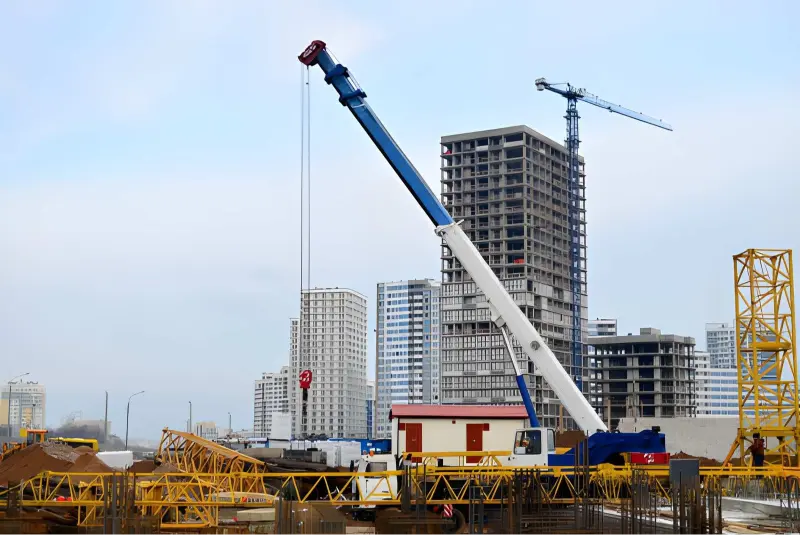
A truck-mounted boom lift can be particularly useful for these applications. Unlike conventional self-propelled boom lifts, it combines an aerial working platform with a road-going vehicle, allowing the equipment to travel between different work locations and be positioned where elevated access is required.
This flexibility makes it worth considering for seasonal maintenance programmes, roadside projects, commercial signage installations and exterior building work in Dubai.
However, not every elevated job requires the same equipment. Working height, horizontal reach, road access, ground conditions, traffic movement and setup requirements all influence whether a truck-mounted platform is suitable.
In this guide, we explore where truck-mounted boom lifts are most useful, why contractors consider them for outdoor projects, and what to check before arranging equipment for a job.
1. What Is a Truck-Mounted Boom Lift?
A truck-mounted boom lift is an aerial work platform installed on a vehicle chassis. It uses an extendable hydraulic boom to raise a working platform, allowing authorised personnel to reach elevated areas for inspection, installation, repair and maintenance.
Depending on the model, the boom may have a telescopic or articulated configuration. Some machines are designed primarily for vertical and horizontal outreach, while others provide additional flexibility when working around obstacles.
The main advantage is mobility.
A conventional boom lift generally needs to be transported between separate project locations. A truck-mounted unit can travel on the road between suitable work areas and be positioned for the next task, subject to vehicle dimensions, road restrictions and site arrangements.
Typical applications include:
- Streetlight inspection and maintenance.
- Roadside advertising and signage installation.
- Building façade inspections and repairs.
- Commercial exterior lighting installation.
- CCTV and telecommunications maintenance.
- Tree trimming and selected landscaping activities.
- Elevated maintenance at commercial and industrial properties.
For contractors managing several locations across Dubai, this type of equipment can offer a practical alternative to arranging separate access equipment for every work area.
2. Why Truck-Mounted Boom Lifts Are Useful for Seasonal Work in Dubai
Outdoor maintenance requirements can change throughout the year. Temperature, working conditions, project schedules and public activity all influence when contractors plan elevated work.
In Dubai, the cooler months are often a convenient period for scheduling outdoor maintenance, advertising installations and larger exterior projects. At the same time, summer maintenance programmes may require more careful planning around heat exposure and suitable working hours.
A truck-mounted boom lift can support these activities by allowing teams to move between different work locations without repeatedly arranging separate equipment transportation.
Cooler months: Outdoor maintenance and installation
The cooler season provides an opportunity for contractors and property managers to plan outdoor work that may be less convenient during periods of extreme heat.
Common activities include:
- Inspecting commercial building façades.
- Replacing external lighting fixtures.
- Installing seasonal promotional signage.
- Maintaining roadside advertising structures.
- Inspecting elevated building components.
- Completing scheduled exterior repairs.
For businesses operating across several locations, having mobile access equipment can help coordinate multiple maintenance tasks within a planned working schedule.
Summer: Planned maintenance and essential repairs
Summer work requires additional attention to heat exposure, worker welfare and operating conditions.
Contractors should assess the expected temperature, working hours, equipment limitations and applicable occupational safety requirements before scheduling elevated work.
A truck-mounted boom lift may be useful for essential outdoor maintenance where access is required at several locations, but equipment mobility does not remove the need for proper heat-stress management.
Before and after weather-related disruptions
Wind, rain and dust can affect elevated work, particularly where platforms are exposed to open areas or structures.
Following adverse weather, maintenance teams may need to inspect external lighting, signs, building components and other elevated installations.
Before raising a platform, operators should check the manufacturer’s permitted wind conditions and assess the actual site environment. Work should not continue when weather conditions exceed the equipment’s operating limits.
The important point is to plan equipment deployment around the actual work requirements rather than assuming that a particular season automatically makes elevated work safe.
3. Road Maintenance: Where Truck-Mounted Boom Lifts Make a Difference
Road infrastructure requires regular inspection and maintenance. Streetlights, traffic-related installations, overhead signs and roadside structures all need periodic attention.
For these activities, a truck-mounted boom lift can provide mobile elevated access without requiring a permanent structure or extensive scaffolding.
Streetlight inspection and maintenance
Streetlights are installed at different heights along roads, junctions, parking areas and commercial developments.
When a lighting fixture stops working or requires inspection, maintenance personnel need safe access to the elevated fitting.
A truck-mounted boom lift can help technicians reach:
- Streetlight fixtures and mounting brackets.
- Elevated electrical connections.
- Lighting poles and associated components.
- External lighting around commercial properties.
- Selected parking-area lighting installations.
The platform provides a working position for inspection and maintenance while the vehicle remains positioned within an approved working area.
Electrical isolation, safe working distances and the relevant utility or road authority procedures must be established before work begins.
Roadside infrastructure inspection
Roadside structures are exposed to dust, heat, vibration and environmental conditions throughout the year.
Periodic inspection may involve checking visible structural components, lighting fixtures, mounting hardware and other elevated installations.
A truck-mounted platform can help maintenance teams access these areas without constructing temporary scaffolding.
For projects beside active roads, however, vehicle positioning and traffic management are essential. The work area must be appropriately protected, with the required permissions and traffic arrangements established before deployment.
Elevated maintenance at junctions and parking facilities
Large parking facilities, commercial access roads and industrial developments often contain elevated lighting, signs and overhead installations.
A mobile aerial platform can be useful when several maintenance points need attention within the same site.
The machine should be selected according to the required working height, horizontal reach, available setup area and the surface’s ability to support the vehicle and its stabilisers.
4. Signage Installation: A Practical Application for Truck-Mounted Boom Lifts
Signage is another area where truck-mounted boom lifts can provide considerable practical value.
Advertising companies, retail businesses, property managers and construction contractors regularly install, replace or maintain signs at elevated positions.
Some installations are straightforward, while others involve reaching over building edges, working around existing structures or positioning equipment beside busy access roads.
Roadside advertising boards
Large advertising boards and promotional structures need periodic maintenance, particularly when campaigns change or existing graphics require replacement.
A suitable truck-mounted boom lift can provide elevated access for:
- Replacing advertising panels.
- Inspecting sign mounting systems.
- Installing selected promotional materials.
- Cleaning accessible signage surfaces.
- Repairing external sign components.
The required working height and horizontal outreach should be calculated before selecting the equipment.
A platform that reaches the top of a sign may still be unsuitable if it cannot position the workers correctly in front of the installation.
Commercial building signage
Shopping centres, hotels, offices and retail properties often have signs installed above entrances or on exterior walls.
Maintenance teams may need to replace illuminated lettering, inspect mounting brackets, repair electrical connections or update branding.
A truck-mounted boom lift can be considered where the vehicle has a suitable approach route and enough space to deploy its stabilisers.
For locations with restricted access, narrow internal roads or limited parking space, a compact spider lift or another suitable access platform may be a better choice.
Temporary event and promotional signage
Dubai hosts a wide range of exhibitions, commercial promotions and outdoor events throughout the year.
Temporary signage and elevated decorative installations may require access equipment during setup and removal.
A truck-mounted platform can be useful when the project involves multiple installation points and vehicle access is permitted.
Before arranging equipment, confirm the event organiser’s access arrangements, working schedule, pedestrian protection requirements and any restrictions on vehicle movement.
5. Building Façade Work: Inspection, Cleaning and Exterior Maintenance
Building façades are constantly exposed to environmental conditions. Dust accumulation, heat, moisture and general exposure can affect exterior surfaces and building components over time.
Regular inspections help property managers identify maintenance requirements before minor issues become more significant.
A truck-mounted boom lift can support selected façade activities where the building height, working distance and vehicle positioning allow safe access.
Façade inspection
Visual inspections are important for identifying potential issues with exterior building components.
Depending on the building design, maintenance teams may need to examine:
- External cladding and visible panel joints.
- Window frames and accessible glazing components.
- Exterior sealant and finishing details.
- External lighting fixtures.
- Signage and mounting brackets.
- Visible deterioration or damage to façade elements.
A boom lift can position an authorised inspection team near the area requiring attention.
For taller buildings, the required working height and outreach must be checked carefully. A truck-mounted platform should not be assumed suitable simply because it can reach a particular vertical height.
Exterior lighting repairs
Commercial buildings frequently use architectural lighting to highlight entrances, façades and exterior features.
These installations require periodic inspection, cleaning and replacement.
A truck-mounted boom lift can provide access to selected external fixtures where there is sufficient ground space for positioning the vehicle and deploying stabilisers.
Before work begins, confirm electrical isolation arrangements, platform capacity and the required working position.
Selected façade cleaning activities
Not every façade cleaning project requires a suspended access system or a large scaffold arrangement.
For certain low- and mid-level exterior areas, a suitable aerial platform may provide practical access for targeted cleaning and maintenance.
Examples include:
- Cleaning accessible exterior panels.
- Removing dust from selected building features.
- Cleaning signage and decorative structures.
- Accessing external maintenance points.
The choice of equipment depends on the building geometry, cleaning method, reach requirements and ground conditions.
For larger façades or projects requiring continuous access along extensive elevations, other solutions such as specialist façade access systems or spider lifts may be more appropriate.
6. Truck-Mounted Boom Lift vs Conventional Boom Lift vs Spider Lift
Choosing the correct access equipment is not simply about working height.
Different platforms have different advantages depending on how the work area is accessed and how frequently the equipment needs to move.
The following comparison provides a general selection guide.
| Equipment | Main advantage | Suitable applications |
| Truck-mounted boom lift | Road mobility between suitable work locations | Roadside maintenance, signage and selected exterior repairs |
| Telescopic boom lift | Long horizontal outreach and elevated access | Construction, steel installation and large outdoor projects |
| Articulated boom lift | Flexible positioning around obstacles | Building maintenance, MEP work and complex access |
| Spider lift | Compact access with stabilising outriggers | Restricted spaces, selected façades and difficult access areas |
| Scissor lift | Vertical platform movement and larger working platforms on suitable surfaces | Straightforward vertical access and maintenance |
A truck-mounted platform is particularly worth considering when the work involves separate outdoor locations.
A telescopic boom lift may be more suitable when the project requires substantial outreach from a fixed working position.
An articulated boom lift can help when technicians need to reach over obstacles, while a spider lift can be useful where access is restricted or the available ground area requires a more compact machine.
Upway Transport LLC provides several aerial access equipment options. Contractors can compare the available solutions through our boom lift rental services in Dubai and equipment rental services.
7. What Should You Check Before Hiring a Truck-Mounted Boom Lift?
Selecting the right machine starts with understanding the actual work location.
Two projects may require the same working height but completely different equipment configurations because of differences in access, ground conditions and horizontal reach.
Here are the main considerations.
Required working height
Working height refers to the approximate maximum height a worker can reach while standing on the platform. It is not necessarily the same as the platform floor height.
Always confirm the manufacturer’s stated working height and platform height.
Allow sufficient practical clearance for the task rather than selecting equipment based only on the building’s total height.
Horizontal outreach
Outreach determines how far the platform can extend horizontally from the machine’s base.
This is particularly important for:
- Roadside signage.
- Building façades.
- External lighting.
- Elevated installations above obstacles.
A machine with adequate vertical height may still be unsuitable if it cannot reach the required working position.
Vehicle positioning and stabilisers
Truck-mounted aerial platforms commonly use stabilising systems, such as outriggers, depending on their design.
The vehicle needs a suitable setup area before the boom is raised.
Check:
- Available parking and setup space.
- Ground level and slope.
- Surface bearing capacity.
- Underground services and nearby structures.
- Traffic and pedestrian movement.
- Outrigger deployment requirements.
Never assume that a vehicle can safely operate on a surface simply because it can drive onto it.
Platform capacity
The platform’s rated capacity includes the permitted combined load of workers, tools and materials.
For signage and façade work, the weight of installation materials can affect equipment selection.
Do not exceed the manufacturer’s platform load limits, and consider any restrictions associated with the boom’s operating envelope.
Road access and working permissions
For roadside projects, confirm whether the vehicle can legally and safely access the intended location.
Depending on the site and activity, the contractor may need road-work approvals, traffic diversion arrangements, barriers, warning signs or other temporary traffic management measures.
These arrangements should be confirmed with the relevant authority or property operator before the equipment arrives.
8. Safety Considerations for Roadside and Façade Operations
Working at height requires proper planning, competent personnel and equipment that is suitable for the task.
Truck-mounted boom lifts introduce additional considerations because the machine operates as both a vehicle and an aerial platform.
A safe operation should consider the complete process, from arriving at the location to lowering and securing the boom.
Ground stability and outrigger positioning
The ground beneath the vehicle and stabilisers must be suitable for the loads imposed during operation.
Soft ground, uneven surfaces, underground voids and poorly supported covers can create stability risks.
Use the manufacturer’s specified stabilisation procedure and suitable support arrangements where required.
Traffic and pedestrian management
Roadside work can expose workers to passing vehicles and pedestrians.
A suitable work-zone plan should identify the operating area, vehicle positioning, exclusion zones and any required traffic control.
Where necessary, coordinate with the responsible road authority before starting work.
Wind and weather conditions
Wind can affect platform stability, particularly when workers handle large signs, panels or other materials.
Check the machine’s permitted wind speed and operating conditions. Large sign panels may also act as wind-catching surfaces.
Stop work when conditions exceed the equipment manufacturer’s limits or the approved site risk assessment.
Overhead electrical hazards
Roadside lighting and exterior maintenance may take place near overhead electrical installations.
Maintain the required safe distances, coordinate with the relevant electrical authority and arrange isolation where necessary.
Do not assume that a boom lift provides electrical insulation unless the specific machine is designed, rated and certified for the intended application.
Operator competence and personal protective equipment
Operators must be authorised and competent to operate the specific equipment.
Workers should receive appropriate task-specific training and use the required personal protective equipment, including suitable fall protection where specified by the manufacturer and applicable procedures.
The US Occupational Safety and Health Administration’s aerial lift guidance provides a useful technical reference covering authorised operators, brakes, outriggers, load limits and fall protection. It is a reference for general safety awareness, not a replacement for UAE requirements.
9. Planning Multiple Work Locations Across Dubai
One practical reason contractors consider truck-mounted access equipment is the possibility of completing several jobs using the same mobile platform.
For example, a maintenance contractor may have separate assignments involving external lighting, commercial signage and selected building inspections.
Rather than treating each task as an independent equipment requirement, the contractor can assess whether a suitable truck-mounted unit can serve multiple locations within the planned schedule.
A practical deployment plan should include:
- Group nearby work locations
Arrange jobs geographically to reduce unnecessary travel between sites.
- Confirm access restrictions
Check vehicle entry requirements, parking availability and any restricted operating hours.
- Assess each working height
A single machine may not be suitable for every location. Compare the required height and outreach at each site.
- Plan setup time
Allow time for vehicle positioning, stabiliser deployment, work-zone preparation and equipment checks.
- Coordinate with site representatives
Confirm permissions, access arrangements and the availability of the work area.
- Review the weather forecast
Check wind and other weather conditions before scheduling elevated work.
This approach is particularly useful for maintenance companies handling recurring assignments across commercial properties, industrial facilities and roadside infrastructure.
10. When Is a Truck-Mounted Boom Lift Not the Right Choice?
Although truck-mounted boom lifts offer useful mobility, they are not suitable for every elevated job.
Recognising their limitations is just as important as understanding their advantages.
Restricted vehicle access
A truck-mounted platform requires a suitable route for the vehicle to reach the work location.
If the project involves narrow internal passages, small courtyards or restricted entrances, a compact spider lift may be more practical.
Limited stabiliser space
The machine may need a wider setup area than the available working space allows.
Buildings with narrow surrounding roads, underground parking structures or restricted ground areas may require another access solution.
Very high or complex building façades
Some high-rise projects require greater working height, horizontal outreach or specialised access arrangements than a particular truck-mounted platform can provide.
A suitable telescopic boom lift, spider lift or specialist façade access system may be more appropriate.
Continuous access across a large working area
For long-duration work covering a substantial façade, repeatedly repositioning a vehicle may be inefficient.
The contractor should compare the expected movement, access requirements and project duration before choosing the equipment.
The best solution is the one that meets the complete job requirements, not simply the machine that appears easiest to arrange.
11. How Upway Transport LLC Supports Elevated Access Projects in Dubai
Choosing access equipment requires more than identifying the required height. Contractors also need to consider site access, working conditions, equipment configuration and rental duration.
Upway Transport LLC supports construction, maintenance and industrial projects across Dubai and the UAE with a range of lifting and access equipment.
Our equipment categories include:
- Boom lifts for elevated construction and maintenance.
- Telescopic boom lifts for projects requiring extended outreach.
- Articulated boom lifts for access around obstacles.
- Spider lifts for selected restricted-access applications.
- Scissor lifts for suitable vertical access requirements.
- Spider cranes and other lifting equipment for specialised projects.
We help customers identify suitable equipment based on their intended application, working height, site conditions and rental requirements.
If your project involves elevated building maintenance, signage installation or exterior construction work, explore our boom lift rental in Dubai service.
For projects requiring greater horizontal outreach, our telescopic boom lift rental solutions are another option worth considering.
You can also explore our complete equipment rental services to compare other machinery available for construction and industrial applications.
The aim is to help contractors arrange equipment that fits their actual site requirements rather than choosing a machine based on height alone.
Frequently Asked Questions
What is a truck-mounted boom lift mainly used for?
Truck-mounted boom lifts are commonly used for roadside maintenance, streetlight repairs, elevated signage installation, telecommunications work and selected building façade maintenance. Their vehicle-mounted design makes them useful when work needs to be completed at multiple suitable locations.
Is a truck-mounted boom lift suitable for roadside maintenance in Dubai?
It can be suitable for tasks such as streetlight inspection, roadside signage maintenance and elevated infrastructure work. However, vehicle positioning, traffic management, road permissions and ground conditions must be assessed before operation.
Can a truck-mounted boom lift be used for building façade cleaning?
Yes, it may be suitable for selected exterior cleaning and maintenance activities where the platform has sufficient height and outreach and the vehicle can be safely positioned. Larger façades may require alternative access systems.
What is the difference between a truck-mounted boom lift and a telescopic boom lift?
A truck-mounted boom lift is installed on a road-going vehicle and is designed for mobility between suitable work locations. A conventional telescopic boom lift is generally a self-propelled machine designed to move around a construction or industrial site and provide extended horizontal outreach.
Can one truck-mounted boom lift handle several maintenance locations?
Potentially, yes. This is one of its practical advantages. However, each location must be checked for working height, outreach, vehicle access, stabiliser space and operating permissions.
Is a truck-mounted boom lift suitable for installing large advertising signs?
It can be suitable for selected installations. The platform capacity, working height, horizontal reach, sign dimensions and wind exposure must all be considered. Large panels may create additional wind-loading risks.
When is the best season for outdoor boom lift work in Dubai?
The cooler months are often convenient for scheduling outdoor maintenance and installation programmes. However, projects can take place throughout the year when working conditions, heat exposure, weather and applicable safety requirements are properly managed.
What information should I provide when requesting a boom lift rental?
Provide the project location, required working height, horizontal outreach, type of work, ground conditions, available setup space and expected rental period. For roadside work, include information about traffic arrangements and any access or permit restrictions.
Final Thoughts
Truck-mounted boom lifts offer a practical way to approach elevated outdoor maintenance, particularly when projects involve multiple work locations.
From roadside lighting and advertising structures to selected building façade repairs, their mobility can help contractors coordinate different activities without repeatedly arranging separate transportation for conventional access equipment.
However, successful deployment depends on more than reaching the required height. Ground stability, horizontal outreach, stabiliser positioning, traffic management, weather and operator competence all play an important role.
For contractors planning seasonal maintenance or upcoming exterior projects in Dubai, assessing these requirements early can make equipment selection and site coordination considerably easier.
If you are planning an elevated maintenance, signage or construction project, contact Upway Transport LLC to discuss your site requirements and explore suitable access equipment for the job.