Equipment Checklist For Large Commercial Mep Projects
INTRODUCTION
Large commercial MEP (mechanical, electrical, plumbing) projects demand precision, speed, and the right equipment. Whether you’re working on a Dubai high-rise renovation, a facility expansion across the UAE, or a multi-floor commercial installation, equipment selection directly impacts your project timeline, budget, and safety performance.
Contractors who make the wrong equipment choices face cascading problems: missed deadlines, inflated labour costs, safety compliance failures, and damage to equipment or structures. The MEP industry operates on tight schedules—every day of delay costs money, and every productivity bottleneck creates a ripple effect across the entire project timeline.
This article provides an actionable, industry-tested equipment checklist specifically designed for large commercial MEP projects in Dubai and across the UAE. Whether you’re installing HVAC systems in a shopping mall, running electrical work on a high-rise, or managing plumbing installations across multiple floors, this guide ensures you select equipment that maximizes efficiency while maintaining safety and regulatory compliance.
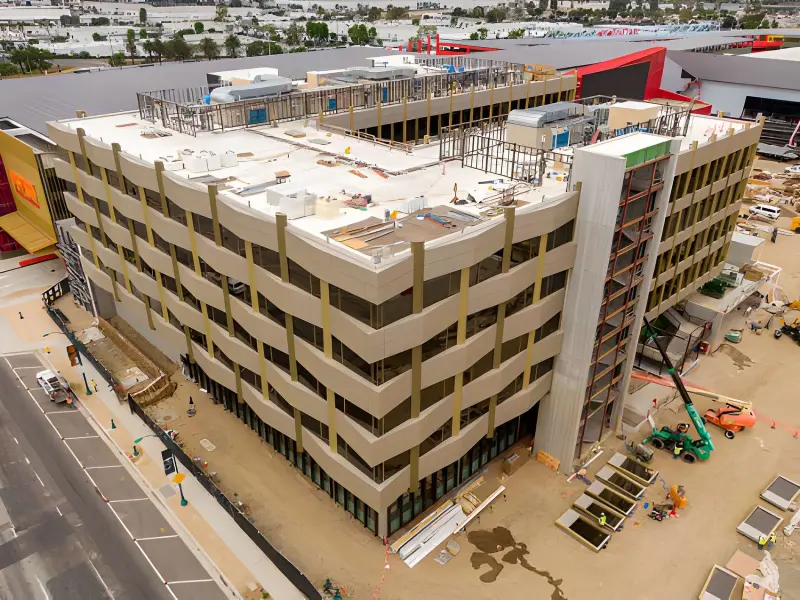
DIRECT ANSWER: ESSENTIAL EQUIPMENT CHECKLIST FOR LARGE COMMERCIAL MEP PROJECTS
Access Equipment (for installation work at height)
- Boom lifts (articulating or telescopic) for working around obstacles
- Scissor lifts for stable, vertical platform access
- Spider lifts for confined spaces and glass facades
- Vertical mast lifts for low overhead clearance areas
- Personnel lifts for final touch-ups and finishing work
Material Handling Equipment (for moving materials and supplies)
- Telehandlers for flexible vertical and horizontal material movement
- Forklifts for ground-level material organization
- Rough terrain forklifts for uneven or outdoor ground conditions
- Mini forklifts for indoor spaces with confined access points
Earthmoving & Site Preparation (where applicable)
- Mini excavators for underground plumbing and MEP rough-ins
- Skid steer loaders for site levelling and material movement
- Backhoe loaders for utility work and trenching
Lifting Equipment (for heavy mechanical components)
- Mobile cranes for major HVAC units, boilers, or large mechanical systems
- Mini cranes for tight spaces and mid-rise buildings
- Pick and carry cranes for short-distance, high-precision lifts
Site Support Equipment (for powering and lighting work areas)
- Diesel generators (various capacities based on electrical load)
- Lighting towers for night-time work and shaded interior spaces
- Air compressors for pneumatic tools and testing systems
- Welding machines for on-site mechanical connections and modifications
WHY EQUIPMENT SELECTION MATTERS FOR MEP CONTRACTORS
MEP contractors operate under unique constraints. Unlike general construction work, MEP installations often involve:
Working at Multiple Heights MEP work spans the entire building—from underground mechanical rooms to rooftop HVAC units. A scissor lift works perfectly for mid-floor electrical installations but becomes dangerous on uneven ground. A boom lift can navigate around existing steel and concrete obstacles while reaching over equipment already installed.
Navigating Existing Infrastructure In commercial buildings, you’re often installing or upgrading systems within occupied or partially constructed spaces. Equipment must fit through doorways, avoid interfering with existing systems, and work in areas with low overhead clearance or restricted access. A compact spider lift, for example, can operate in tight spaces where larger boom lifts cannot fit.
Coordinating with Other Trades Large MEP projects involve multiple teams working simultaneously. Your equipment choice affects where and when other trades can operate. A rigid, large-footprint scissor lift might block access routes; a compact, maneuverable boom lift allows better site traffic flow.
Maintaining Productivity on Tight Timelines MEP schedules are aggressive. Equipment downtime, incorrect sizing, or insufficient capacity forces workarounds—scaffolding, manual labour, or delayed deliveries. The right equipment installed from day one prevents these cascades.
Managing Safety and Compliance Dubai and UAE construction standards require IPAF (International Powered Access Federation) certification, equipment inspection records, and documented safe working practices. Using the wrong equipment or operating beyond its capacity creates liability exposure. The right equipment reduces accident risk and simplifies compliance audits.
ACCESS EQUIPMENT FOR MEP INSTALLATION WORK
Boom Lifts: The Workhorse for Obstacle Navigation
Boom lifts are the preferred choice for MEP contractors because they can work around obstacles, reach over existing installations, and operate on uneven ground (rough terrain models).
When to use a boom lift:
- Installing HVAC ducts and pipe runs at height
- Working around steel beams, existing equipment, or structural obstacles
- Reaching exterior façade elements (mechanical vents, electrical conduits)
- Projects where footprint flexibility matters (confined sites, existing buildings)
- Multi-floor work requiring efficient repositioning between levels
Articulating vs. Telescopic boom lifts:
- Articulating booms offer superior obstacle avoidance and can work in tighter spaces. Ideal for façade work, interior retrofits, and projects with complex geometry.
- Telescopic booms provide greater horizontal reach and higher platform speeds. Better for open spaces and exterior rooftop HVAC installations.
Common MEP applications in UAE projects: Dubai’s high-rise retrofits frequently use articulating booms for interior mechanical room upgrades where space is tight and fixtures already occupy ground-level areas. Boom lifts are also essential on multi-floor commercial complexes where plumbing and electrical rough-in work occurs at different heights simultaneously.
Working height and reach considerations:
- Standard boom lifts reach 12–18 meters, sufficient for most mid-rise and high-rise MEP work
- Extended-reach models exceed 20 meters for rooftop mechanical systems
- Horizontal reach is critical—ensure the boom can extend over parapets, ledges, or obstacles
Scissor Lifts: The Stability Choice for Vertical Work
Scissor lifts provide large, stable platforms for crew and material movement. They’re ideal when vertical access is the primary need and obstacles are minimal.
When to use a scissor lift:
- Vertical electrical and plumbing installations on relatively open floor plans
- Interior finishing work where platform stability matters
- Material staging and supply distribution
- Confined interior spaces where a boom lift’s horizontal reach isn’t needed
- Buildings with narrow aisles or tight floor-to-floor clearance
Indoor vs. outdoor scissor lifts:
- Electric scissor lifts are quiet, produce zero emissions, and are mandatory in occupied commercial buildings and hospitals
- Diesel scissor lifts offer greater load capacity and terrain flexibility for outdoor and uneven ground applications
Load capacity and crew size: Standard scissor lifts accommodate 4–6 personnel plus 500–1,000 kg of materials. Larger models handle up to 10 personnel and 1.5 tonnes. Verify your planned crew size and material load—undersizing creates productivity loss and multiple trips.
Advantages for MEP work: Scissor lifts minimize site congestion because their compact footprint allows multiple lifts on one floor. They’re particularly useful for high-rise MEP work where coordinating access for different trades is critical.
Spider Lifts: The Solution for Confined Spaces and Glass Façades
Spider lifts (also called self-propelled booms or crawler booms) combine vertical reach with exceptional maneuverability. Their articulated legs allow operation on stairs, in narrow corridors, and through standard doorways.
When to use a spider lift:
- Interior retrofits where standard boom lifts cannot fit through doorways
- Multi-floor interior MEP work requiring frequent repositioning
- Glass façade installations and exterior mechanical work
- Stairwell work and projects requiring access through tight passages
- Confined spaces on multi-tenant buildings where disruption must be minimal
Typical MEP applications: Shopping mall mechanical system upgrades and hospital HVAC retrofits frequently demand spider lifts because doorway access is limited and floor layouts are complex. Glass installation companies in Dubai rely on spider lifts for façade renovation work.
Terrain capability and indoor use: Spider lifts operate on smooth indoor floors and can navigate stairs and uneven outdoor terrain. Their low ground pressure (spreading weight across multiple legs) prevents floor damage in occupied commercial buildings.
Vertical Mast Lifts and Personnel Lifts: The Compact Specialists
These are specialized access platforms for projects with very low overhead clearance or final-stage finishing work.
When to use vertical mast lifts:
- Areas with overhead restrictions (shopping malls, warehouses, hospitals)
- Final electrical and plumbing connections in finished spaces
- Indoor work in buildings with standard ceiling heights (3–4 meters)
- Projects where floor protection is critical
Personnel lifts and individual platforms: For single-person work (final inspections, sensor installations, light fixture mounting), personnel lifts offer cost efficiency and minimal site footprint.
MATERIAL HANDLING EQUIPMENT FOR MEP PROJECTS
Telehandlers: The Flexible Powerhouse
Telehandlers combine vertical reach with horizontal extension, making them invaluable for MEP material movement. Unlike standard cranes, they can position heavy equipment precisely at installation points.
When to use a telehandler:
- Moving large HVAC units, boilers, and mechanical equipment to rooftops or mid-floor mechanical rooms
- Positioning heavy plumbing fixtures (large water tanks, pressure vessels)
- Loading and unloading delivery trucks while positioning materials directly at work areas
- Outdoor mechanical installations on facilities and industrial sites
Load capacity and reach: Standard telehandlers lift 2–3 tonnes at full height (10–12 meters). Ensure the equipment you’re moving stays within the lift curve at the required height and horizontal distance.
Rough terrain vs. standard models: Rough terrain telehandlers work on uneven ground and outdoor sites. Standard models are better for paved areas and indoor industrial spaces.
Forklifts and Mini Forklifts: Ground-Level Organization
Forklifts organize materials on-site and load them into lifts or hoisting equipment. Mini forklifts fit through doorways and work indoors without damaging floors.
When to use standard forklifts:
- Material staging in outdoor laydown areas
- Loading access equipment and supplies onto lifts
- Outdoor MEP material organization on large construction sites
Mini forklifts for interior work:
- Moving materials through building corridors
- Indoor warehouse conversions and facility upgrades
- Hospitals, shopping malls, and occupied buildings where floor protection matters
- Pneumatic-tire mini forklifts prevent floor damage
LIFTING EQUIPMENT FOR HEAVY MECHANICAL SYSTEMS
Mobile Cranes: For Major Mechanical Installations
Mobile cranes lift and position heavy mechanical equipment—chiller units, air handling units (AHUs), boilers—precisely at installation points. They’re essential for high-rise MEP work.
When to use a mobile crane:
- Installing large chiller units and AHUs on rooftops
- Positioning boilers and water storage tanks
- Heavy plumbing fixture installation (commercial hot water systems)
- Multi-ton equipment requiring precise placement
Crane capacity planning: Ensure you know equipment weight, rigging requirements, and rooftop access. Mobile cranes come in capacities from 20 tonnes to 500+ tonnes. Undersizing requires secondary rigging and multiple lifts, killing productivity.
Mini Cranes and Pick-and-Carry Cranes: Precision Placement in Tight Spaces
Mini cranes offer high precision in confined areas. Pick-and-carry cranes (telecranes) move short distances with high accuracy—ideal for equipment placement within buildings.
MEP applications: Positioning HVAC units within mechanical rooms where space is extremely tight, or placing equipment through windows on renovations.
SITE SUPPORT EQUIPMENT: POWER, LIGHT, AND AIR
Diesel Generators: Sizing for Your Electrical Load
MEP work requires reliable power for tools, lighting, and systems testing. Undersized generators create bottlenecks; oversized units waste rental costs.
Generator sizing calculation:
- Total kW of simultaneous loads (tools, compressors, lighting, testing equipment)
- Add 20–30% safety margin
- Common sizes: 10 kW (small interior work), 30 kW (multi-floor projects), 60+ kW (large industrial sites)
Fuel efficiency and runtime: Diesel generators are cost-effective for extended projects. Confirm fuel consumption rates and tank capacity to minimize refuelling trips.
Lighting Towers: Essential for Interior and Night Work
Lighting towers illuminate mechanical rooms, dark interior spaces, and enable night-time work on schedule-critical projects.
When to use lighting towers:
- Interior mechanical room work in buildings with minimal natural light
- Projects extending into evening hours
- Multi-floor installations requiring shadow-free working conditions
- Emergency lighting during power testing and commissioning
Air Compressors: For Pneumatic Tools and System Testing
Pneumatic tools are faster and more durable than electric alternatives on large MEP projects. Air compressors also pressurize systems for testing before handover.
Compressor sizing:
- Pneumatic impact wrenches: 6–8 cubic meters per minute (CFM)
- Multi-tool operations: 10–15 CFM
- System pressure testing: Higher capacity models for faster pressurization
SAFETY CONSIDERATIONS FOR ACCESS EQUIPMENT ON MEP PROJECTS
IPAF Certification and Operator Training
UAE construction regulations require IPAF (International Powered Access Federation) certification for boom lift and scissor lift operators. Ensure your team has current certification before equipment arrives.
Ground Conditions and Stability
- Check ground bearing capacity—soft, newly poured concrete or water-laden soil reduces stability
- Level the equipment using outriggers on boom lifts
- Avoid working on sloped floors exceeding 5 degrees
- Indoor floor protection (plywood, anti-slip mats) prevents equipment damage and maintains access
Weather and Environmental Factors
- High winds affect boom lift operation (cease work above 40 km/h sustained winds)
- Dust storms and extreme heat require cooling breaks and increased inspection frequency
- Rain makes outdoor ramps and uneven terrain hazardous
Load Management and Weight Distribution
- Never exceed platform capacity (including crew, tools, and materials combined)
- Distribute weight evenly across the platform
- Secure materials to prevent shifting during movement
Daily Inspection and Maintenance
Before each shift:
- Check hydraulic fluid levels and hose condition
- Inspect platform guardrails and safety rails for damage
- Test emergency descent systems on boom lifts
- Verify outrigger functionality and ground contact
Incident Prevention on Multi-Trade Sites
On large projects with multiple equipment types:
- Establish dedicated equipment pathways
- Use spotters when equipment operates near personnel
- Brief all trades on equipment movement and no-go zones
- Implement traffic management plans for high-congestion areas
COST FACTORS AND RENTAL OPTIMIZATION
Daily vs. Weekly vs. Monthly Rental Rates
- Daily rentals suit short-duration tasks (1–3 days)
- Weekly rates offer 10–15% discounts and work for 1–2 week assignments
- Monthly rentals provide 30–40% savings for extended MEP phases
- Project rentals (fixed-term for entire MEP phase) lock in costs and include maintenance
Additional Cost Factors
- Delivery and setup fees: Essential for high-rise projects (crane placement, rigging)
- Operator services: IPAF-certified operators available for hire if your team lacks certification
- Fuel and maintenance: Confirm whether included in rental or billed separately
- Insurance and risk: Verify coverage; some rentals require client insurance
- Damaged equipment charges: Clear documentation prevents disputes
Cost-Saving Strategies
- Consolidate equipment needs: Plan your full MEP schedule and rent multiple items simultaneously—most suppliers offer bundle discounts
- Extend rental periods strategically: A 4-week rental often costs less per day than two 2-week rentals
- Combine equipment types: Renting lifts, generators, and compressors from one supplier typically reduces overall costs
- Schedule work to minimize idle time: Equipment sitting unused during crew breaks still incurs daily charges
- Plan preventive maintenance: Equipment breakdowns mid-project require urgent replacement rentals at premium rates
FREQUENTLY ASKED QUESTIONS
Q: What’s the difference between a boom lift and a scissor lift for MEP work?
A: Boom lifts offer horizontal reach and obstacle navigation—ideal for working around existing installations, exterior façade work, and uneven ground. Scissor lifts provide stable vertical platforms for crew and materials—better for interior work with open floor plans. Choose a boom lift if you need flexibility and obstacle avoidance; choose a scissor lift if vertical access and platform stability are your priorities.
Q: Do I need IPAF certification for my team to operate lifts?
A: Yes. UAE construction standards and Dubai Municipality requirements mandate IPAF certification for all boom lift and scissor lift operators. Certification requires classroom training and practical assessment. Upway Transport LLC can recommend IPAF training providers and can supply operator services if your team is uncertified.
Q: How much weight can a scissor lift handle?
A: Standard scissor lifts accommodate 4–6 personnel plus 500–1,000 kg of materials. Heavy-duty models lift up to 10 personnel and 1.5 tonnes. Calculate your total crew size plus material load before selecting equipment.
Q: What size generator do I need for my MEP tools?
A: Calculate total kW of simultaneous loads (impact drills, grinders, compressors, lighting). Most multi-tool MEP work requires 30–60 kW generators. Add a 20–30% safety margin. If unsure, consult your equipment supplier.
Q: Can spider lifts operate indoors?
A: Yes. Spider lifts navigate tight spaces, stairs, and doorways, making them ideal for interior multi-floor MEP retrofits in occupied buildings. Their low ground pressure prevents floor damage.
Q: What’s the typical rental cost for a boom lift in Dubai?
A: Daily rates range from AED 800–2,000 depending on lift type and height. Weekly and monthly rates offer significant discounts. Request quotes from multiple suppliers—Upway Transport LLC provides competitive pricing and detailed cost breakdowns for project-specific requirements.
Q: How do I ensure ground safety when operating equipment?
A: Before each day’s work, inspect ground bearing capacity (especially on newly poured concrete or water-logged areas). Level equipment using outriggers and anti-slip mats. Confirm weather conditions don’t exceed operational limits (winds above 40 km/h). Perform daily equipment inspections focusing on hydraulics, guardrails, and outrigger function.
Q: Should I rent equipment for the full MEP phase or daily as needed?
A: Monthly project rentals lock in costs, include maintenance, and eliminate delivery delays. This approach works best if your MEP schedule is fixed. Daily rentals suit projects with unpredictable timelines or short bursts of work. Most contractors save money and reduce logistical headaches with phased project rentals.
Q: What happens if equipment breaks down during my project?
A: Rental agreements typically include maintenance and rapid replacement. However, confirm breakdown response times with your supplier upfront. Having backup equipment reserved or alternate supplier relationships prevents timeline delays if primary equipment fails.
GETTING STARTED: NEXT STEPS FOR YOUR MEP PROJECT
- Audit your project scope: Document all work phases, working heights, crew size, and material volumes
- Create an equipment timeline: Map when each equipment type is needed (access, material handling, lifting, support)
- Verify safety compliance: Confirm IPAF certification status and arrange training if required
- Request detailed quotes: Provide your specific requirements to multiple suppliers for accurate pricing
- Plan logistics: Coordinate delivery, setup, and equipment positioning with your main contractor
- Document everything: Keep records of equipment specifications, operator certifications, and maintenance inspections