Introduction
The crane choice determines your project’s lifting strategy. A straightforward material-handling task seems simple—you need a crane. But selecting between a mobile crane and a mini crane involves distinct trade-offs that directly impact timeline, cost, and operational efficiency.
Mobile cranes deliver power and speed. They position heavy loads across large sites with rapid setup. Mini cranes excel in confined spaces, offering precision and access where larger equipment can’t fit. Neither is universally better—each solves specific problems.
This guide walks through the practical differences, explains when each excels, and provides a clear framework for choosing the right crane type for your Dubai construction project.
Understanding the Fundamental Difference
Mobile Cranes: Truck-Mounted Versatility
Mobile cranes combine a standard chassis (truck-mounted) with a rotating crane superstructure. They’re road-legal and travel between sites under their own power. Typical capacity ranges from 15–40 tonnes, with boom lengths reaching 25–40 metres.
A mobile crane arrives at your site, sets up within hours, lifts loads, and repositions as needed—all without requiring fixed installation infrastructure.
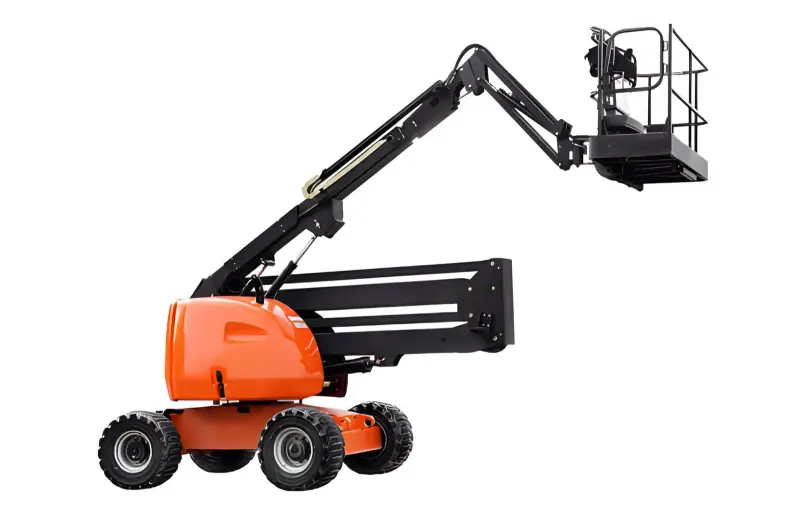
Mini Cranes: Compact Problem Solvers
Mini cranes are smaller, specialized machines. Crawler-based mini cranes (tracked, typically 2–8 tonnes) fit through doorways and operate on soft ground. Small hydraulic mini cranes (3–12 tonnes) offer similar compactness with different load/reach profiles.
Mini cranes excel at accessing confined spaces, maneuvering in tight urban areas, and working interior to buildings where large equipment is impossible.
The fundamental trade-off: mobile cranes offer productivity and load capacity; mini cranes prioritize access and precision in constrained environments.
Mobile Cranes—Comprehensive Breakdown
Capacity and Performance
Standard mobile cranes range from 15–40 tonnes capacity. A 20-tonne mobile crane lifts typical construction loads—steel beams, HVAC units, machinery—across open sites efficiently.
Boom length directly affects reach. A 25-metre boom reaches across most site widths. Longer booms (35–40 metres) handle high-rise work and broader coverage areas.
Key advantage: Mobile cranes maintain consistent capacity throughout their operational reach. A 20-tonne crane lifts 20 tonnes at ground level and maintains meaningful capacity at height—unlike some cranes where capacity decreases significantly with height.
Setup and Deployment Speed
Mobile cranes deploy within 2–4 hours. Operator arrives, positions equipment on stable ground, sets outriggers (stabilizing legs), and begins lifting. No installation crews, no complex logistics.
This speed makes mobile cranes ideal for projects with variable lifting needs or fast timelines. Unloading delivery vehicles the day they arrive becomes feasible.
Mobility and Repositioning
A mobile crane repositions quickly between task locations. Lifting at the building’s north side in the morning, south side in the afternoon—easily achieved. This flexibility supports dynamic workflows where lifting locations vary.
Cost Structure
Mobile crane rental typically costs AED 20,000–35,000 monthly, though daily rates (AED 1,500–2,500) apply for shorter projects. For week-long tasks, daily rates often prove more economical than monthly commitments.
Optimal Scenarios for Mobile Cranes
Mobile cranes make economic sense when:
- Lifting locations vary (multiple repositioning moves required)
- Project duration is short (2–12 weeks, where setup efficiency matters)
- Open sites with stable ground (allows standard outrigger positioning)
- Standard loads (10–30 tonnes, matching typical mobile crane capacity)
- Early project phases (unloading delivery vehicles, equipment placement)
Mini Cranes—Comprehensive Breakdown
Capacity and Reach Profile
Mini cranes typically lift 2–12 tonnes with boom lengths of 6–15 metres. They’re not designed for heavy loads—rather, they excel at precise placement in confined spaces.
A 5-tonne mini crawler crane fits through a standard 1-metre doorway. This capability alone makes mini cranes essential for interior finishing work, basement installation, and renovation projects where large equipment access is impossible.
Access and Site Constraints
Mini cranes operate where mobile cranes cannot. Soft ground—muddy areas, rooftops with weight restrictions—accommodates crawler-based mini cranes better than wheeled mobile cranes.
Interior to buildings, mini cranes maneuver through corridors, up stairwells (in pieces), and position equipment in spaces isolated from standard construction access.
Setup and Operational Flexibility
Mini cranes require minimal setup. Crawler-based models are towed to site and deployed immediately. Small hydraulic models (wheeled) require only positioning and stabilization.
Setup takes 30–60 minutes. This rapid deployment supports finishing stages where multiple small lifts (HVAC units, lighting fixtures, mechanical equipment) occur daily at different interior locations.
Cost Structure
Mini crane rental costs AED 8,000–15,000 monthly or AED 800–1,500 daily. For short-duration work (1–5 days), daily rates are cost-competitive with mobile cranes despite smaller capacity.
Optimal Scenarios for Mini Cranes
Mini cranes make economic sense when:
- Space is severely constrained (urban infill, interior work, limited access)
- Loads are light (under 10 tonnes, typical finishing-stage materials)
- Precision matters (positioning in tight spaces where mobile cranes can’t operate)
- Ground conditions are poor (soft soil, rooftops, interior floors)
- Multiple interior lifts (finishing stages with distributed work locations)
- Access is restricted (basements, interior renovations, confined spaces)
H2: Direct Comparison Matrix
| Factor | Mobile Crane | Mini Crane |
| Typical Capacity | 15–40 tonnes | 2–12 tonnes |
| Boom Length | 25–40 metres | 6–15 metres |
| Setup Time | 2–4 hours | 30–60 minutes |
| Monthly Rental | AED 20,000–35,000 | AED 8,000–15,000 |
| Daily Rate | AED 1,500–2,500 | AED 800–1,500 |
| Space Requirements | 15m × 8m (typical) | 6m × 4m (compact) |
| Access Constraints | Standard sites, open areas | Confined spaces, interiors |
| Repositioning Speed | Quick | Very quick |
| Load Precision | Good | Excellent |
| Lifting Height | 30–50+ metres | 10–20 metres |
| Best Project Duration | 4+ weeks | 1–3 weeks |
| Operator Certification | Mobile crane cert. | Standard equipment cert. |
Cost Analysis and Project Economics
Mobile Crane Cost Example
Project scenario: 8-week commercial fit-out requiring 15–20 lifts weekly (steel beams, HVAC units, equipment).
Equipment cost calculation:
- Monthly rental: AED 25,000 × 2 months = AED 50,000
- Setup and delivery: AED 3,000–5,000
- Operator cost (included in rental): Varies by provider
- Total estimated cost: AED 53,000–55,000
Operational efficiency: Mobile crane completes 20 lifts in 1–2 days, then repositions or waits. Overall project timeline: 8 weeks as planned.
Mini Crane Cost Example
Project scenario: Same 8-week fit-out, but loads are lighter (3–5 tonnes) and distributed across multiple interior locations daily.
Equipment cost calculation:
- Daily rate: AED 1,200 × 35 days (5 days weekly, 7 weeks needed) = AED 42,000
- Setup minimal, included in daily rate
- Total estimated cost: AED 42,000
Operational advantage: Mini crane’s interior access eliminates waiting time. Multiple interior lifts happen daily without repositioning delays.
For this scenario, mini crane saves approximately AED 10,000–15,000 while actually improving operational efficiency through better access.
Real-World Project Scenarios
Scenario 1: Office Tower Structural Steel Erection
Project type: 15-storey office building, structural steel framework.
Lifting requirements: Heavy structural beams (20–30 tonnes), high-reach placement (50+ metres), concentrated lifting during structural phase.
Recommendation: Mobile crane (or larger tower crane)
Reasoning: Steel beams exceed mini crane capacity. Concentrated lifting during structural phase justifies mobile crane’s power and speed. Repositioning supports vertical placement across multiple building faces.
Cost: AED 30,000–40,000 monthly for mobile crane, 3–4 months = AED 90,000–160,000
Scenario 2: Boutique Fit-Out in Constrained Urban Building
Project type: 5-storey retail/residential conversion in established downtown area with limited external access.
Lifting requirements: Light finishing materials (1–4 tonnes), distributed interior placement, basement mechanical room installation.
Recommendation: Mini crawler crane (or small hydraulic crane)
Reasoning: Mobile crane cannot access interior basement. Multiple interior locations require crane versatility. Light loads match mini crane capacity. Confined urban environment limits mobile crane positioning.
Cost: AED 1,200 daily × 25 days = AED 30,000
Advantage: Mini crane is cost-effective while solving access problems that mobile cranes cannot address.
Scenario 3: Mixed-Phase Commercial Development
Project type: 12-month mixed-use development (structural + finishing phases).
Recommendation: Hybrid approach—mobile crane for structural phase, mini crane for finishing phase
Reasoning: Structural phase (months 1–6) requires heavy lifting; mobile crane optimized for this. Finishing phase (months 7–12) involves light interior work; mini crane provides better access efficiency.
Cost: Mobile crane (6 months) AED 30,000 × 6 = AED 180,000 + Mini crane (3 months, selective use) AED 12,000 × 3 = AED 36,000 = Total AED 216,000
Alternative (mobile crane only, 12 months): AED 30,000 × 12 = AED 360,000
Hybrid savings: Approximately AED 144,000 while improving efficiency through phase-specific equipment.
Dubai-Specific Considerations
Urban Site Challenges
Dubai’s dense downtown areas and established commercial zones often feature constrained access. Mobile cranes face space limitations that mini cranes overcome. Boutique fit-outs in downtown locations frequently rely on mini cranes exclusively.
Summer Heat Impact
May–September temperatures (45–50°C) affect mobile crane efficiency more than mini cranes. Larger equipment operates less efficiently in extreme heat. Smaller, more agile mini cranes handle heat-related constraints better.
Schedule critical structural lifting (which mobile cranes excel at) October–April when possible. Reserve summer months for finishing work where mini cranes become advantageous.
Ground and Soil Conditions
Dubai’s sandy soil sometimes creates challenges for outrigger-based equipment (mobile cranes). Mini crawler cranes distribute weight better across soft ground, making them preferable for sites with poor soil conditions.
Request soil investigation reports if ground conditions are uncertain. Share reports with equipment providers—they’ll recommend optimal crane types.
Common Mistakes in Crane Selection
- Overestimating mini crane capacity
Mini cranes can’t replace mobile cranes. Attempting to lift heavy loads with undersized equipment creates inefficiency and safety risks. Know your load weights—don’t guess.
- Assuming mobile cranes always cost more
On short projects (1–3 weeks) with light loads, daily-rate mobile cranes can cost more than mini cranes. Calculate total project cost, not just monthly rates.
- Selecting based on equipment size rather than load requirements
Bigger equipment isn’t always better. A 5-tonne mini crane doing interior work outperforms a 25-tonne mobile crane that can’t access interior spaces. Match equipment to actual work requirements.
- Underestimating interior access needs
Projects with significant interior work underestimate mini crane value. Interior HVAC installation, mechanical placement, and finishing work often require mini cranes regardless of other lifting needs.
- Failing to assess site conditions before selection
Soft ground, restricted access, and interior work all favour mini cranes. Selecting mobile cranes without site assessment creates inefficiency.
- Ignoring operator availability
Mini crane operators differ from mobile crane operators. Confirm operator availability and certification for your chosen equipment type before finalizing selection.
Best Practices for Crane Selection
Plan equipment needs 4–6 weeks in advance. Peak seasons (October–April) create equipment scarcity. Early planning ensures availability and competitive pricing.
Conduct site assessment before selection. Visit the site. Assess access routes, interior spaces, ground conditions, and neighbouring building proximity. This assessment informs optimal equipment choice.
Distinguish between phases. Structural work may demand mobile cranes while finishing work suits mini cranes. Plan phase-specific equipment rather than single-equipment reliance.
Calculate total project cost. Compare monthly rental costs, daily rates, operator expenses, and timeline impact. Total project cost matters more than individual rental rates.
Verify operator certifications. Confirm operators hold current certifications specific to your chosen equipment. Operator expertise matters more than equipment sophistication.
Document load weights and dimensions. Before finalizing equipment selection, confirm actual load specifications. Oversized or undersized equipment selection often stems from vague load assumptions.
Establish clear agreements. Confirm what’s included in rental rates (delivery, setup, operator, fuel, maintenance). Vague agreements create mid-project disputes.
FAQ Section
Q1: Can a mini crane replace a mobile crane to save money? No. Mini cranes lift significantly less weight (2–12 tonnes vs. 15–40 tonnes) and reach lower heights. They’re optimal for light loads in confined spaces, not heavy structural work. Use mini cranes where their advantages apply, but don’t attempt to replace mobile cranes on heavy-lifting work.
Q2: Which crane is better for interior work? Mini cranes—specifically crawler-based models—are ideal for interior work. They fit through doorways, maneuver in confined spaces, and position loads precisely. Mobile cranes cannot access interior spaces effectively.
Q3: What’s the cost difference between mobile and mini crane rental? Mobile cranes cost AED 20,000–35,000 monthly or AED 1,500–2,500 daily. Mini cranes cost AED 8,000–15,000 monthly or AED 800–1,500 daily. For short projects (1–3 weeks), daily-rate mini cranes are often more cost-effective.
Q4: How do soil conditions affect mobile vs. mini crane choice? Soft ground favours mini crawler cranes, which distribute weight better than wheeled mobile cranes. If ground investigation reveals poor soil conditions, confirm with equipment providers whether mobile cranes require reinforcement (matting/supports) or if mini cranes are preferable.
Q5: Can I use a mobile crane for finishing work instead of a mini crane? Technically yes, but inefficiently. A mobile crane positioned to access interior finishing locations is expensive and inflexible. Mini cranes excel at this work. Use equipment optimized for each project phase.
Q6: What’s the maximum load a mini crane can safely lift? Typical mini cranes safely lift 5–12 tonnes. Specific limits depend on boom length and load distance from the crane. Always confirm load capacity with equipment providers before finalizing crane selection.
Q7: How far in advance should I arrange crane rental? Begin planning 6–8 weeks before deployment. Peak seasons (October–April) create equipment scarcity. Early planning ensures availability and improves pricing negotiation.
Q8: Can I use a mini crane instead of a mobile crane to reduce fuel costs? Mini cranes consume less fuel than mobile cranes, but fuel represents only 10–15% of total equipment costs. Don’t select equipment primarily for fuel savings—choose based on work requirements and total project cost.
Best Practices Summary
Mobile cranes excel at:
- Heavy loads (15–40 tonnes)
- Distributed lifting locations across open sites
- Projects requiring 4+ weeks of equipment
- Structural work with consistent, high-volume lifting
Mini cranes excel at:
- Light loads (2–12 tonnes)
- Confined spaces and interior work
- Projects requiring 1–3 weeks
- Finishing stages with distributed interior lifts
- Sites with restricted access or poor ground conditions
Hybrid approaches work best when:
- Projects span multiple phases requiring different equipment
- Budget accommodates both equipment types
- Efficiency gains justify additional equipment cost
Conclusion
Mobile cranes and mini cranes solve different problems. Neither is universally better—each excels under specific circumstances.
Choose mobile cranes when your project involves heavy loads, open-site lifting, or high-volume structural work. They deliver power, speed, and cost-efficiency for appropriate applications.
Choose mini cranes when your work is light, locations are constrained, or access is limited. They provide access and precision that larger equipment cannot match.
Consider hybrid approaches when projects span multiple phases with different equipment requirements. Structural phases often demand mobile cranes; finishing phases benefit from mini cranes.
The contractors who execute projects most efficiently match equipment to actual work requirements—not equipment preferences or budget assumptions. Site assessment, load calculations, and phase-specific planning all inform optimal crane selection.
Dubai’s dense urban environment increasingly favours mini cranes for finishing work and interior installation. Open industrial sites and structural work continue to rely on mobile cranes. Most complex projects benefit from both equipment types deployed strategically across their lifecycle.
Need guidance on crane selection for your specific project? Our team has managed hundreds of Dubai construction projects and understands when each crane type excels. We’ll assess your site conditions, load requirements, and timeline to recommend a customized crane strategy. Contact our crane specialists to discuss your project and get a detailed recommendation.
Quick Decision Guide:
- Heavy structural work, open sites, high-volume lifting: Mobile crane
- Interior finishing, confined spaces, light loads: Mini crane
- Multi-phase projects with varying requirements: Consider hybrid approach