Introduction
Equipment decisions shape project outcomes. The wrong machinery creates bottlenecks, extends timelines, and inflates budgets. Conversely, strategically selected equipment accelerates work, improves safety, and delivers projects on schedule.
Yet many contractors approach equipment selection reactively—requesting “whatever equipment we need” without strategic planning. This reactive approach costs money and causes delays.
Proper equipment selection requires understanding your project’s unique requirements, evaluating multiple options, and aligning machinery choices with timeline and budget constraints. This guide walks you through the strategic framework construction professionals use to select machinery that genuinely supports project success.
The Core Equipment Selection Framework
Effective equipment selection follows a systematic approach. Rather than asking “what equipment should we use,” ask four foundational questions:
- What is your project type and scope? A shopping mall, office building, warehouse, and residential complex all demand different equipment. Project type determines which machinery categories you’ll need.
- What is your project timeline? A 10-week fit-out project requiring rapid equipment deployment differs fundamentally from an 18-month structural build. Timeline directly influences equipment selection and rental strategies.
- What are your site conditions and constraints? Urban infill sites, open industrial areas, and constrained access zones each require different machinery. Site conditions determine equipment sizing, type, and feasibility.
- What is your budget and cost tolerance? Equipment represents significant project cost. Understanding whether to prioritize speed, cost efficiency, or flexibility helps clarify optimal selections.
These four questions form the foundation of every equipment decision that follows.
Analyzing Your Project Requirements
Project Type and Phase Identification
Commercial construction moves through distinct phases. Site preparation equipment differs from structural equipment, which differs from finishing-stage machinery.
Site preparation phase (weeks 1–4): Excavators, bulldozers, grading equipment, compactors
Structural phase (weeks 5–16): Tower cranes, concrete pumps, lifting equipment, material handlers
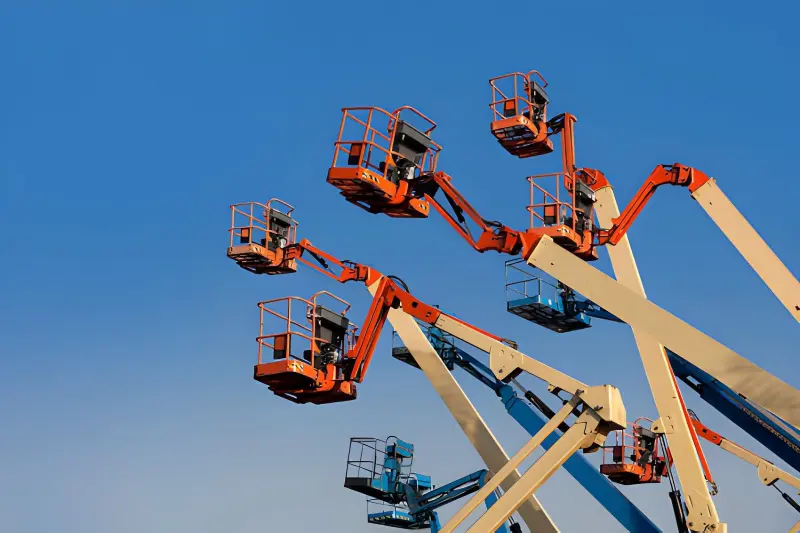
Finishing phase (weeks 17+): Scissor lifts, boom lifts, smaller equipment, mobile cranes for specialized tasks
Understanding your project’s phases clarifies which equipment categories matter most and when you’ll need them. Many contractors underestimate equipment timelines by failing to plan phase-specific requirements.
Calculating Volume and Capacity Needs
Equipment selection depends on work volume. A 1,000-cubic-metre site excavation requires different equipment than a 5,000-cubic-metre bulk earthmoving project.
Before selecting machinery, calculate:
- Excavation volume (cubic metres)
- Material weight and type (soil, sand, mixed debris)
- Lifting capacity needed (tonnes)
- Work height requirements (metres)
- Daily productivity targets (volume per day)
A 25-tonne excavator removes 300–400 cubic metres daily. If your project requires 2,000 cubic metres excavated in 5 weeks, you need 2–3 machines or extended timeline. These calculations determine whether standard equipment works or if larger machinery is necessary.
Site Conditions and Their Impact on Equipment Choice
Space Constraints and Access
Dubai’s dense urban sites often eliminate standard equipment options. A confined downtown site may require compact excavators (6–15 tonnes) instead of standard 25-tonne machines. The trade-off: reduced daily productivity (100–150 cubic metres vs. 300–400 cubic metres) balanced against site feasibility.
Assess your site’s:
- Available ground space for equipment bases
- Building width and doorway dimensions (if interior work)
- Access roads and delivery routes
- Neighbouring building proximity
- Utility line locations and conflicts
Soil and Ground Conditions
Dubai’s sandy soil, possible clay layers, and variable water tables all affect machinery performance. Sandy soil requires different excavation techniques than clay. Equipment selection should account for these conditions.
Request soil investigation reports (bore logs) before finalizing equipment decisions. This relatively inexpensive analysis prevents costly equipment mistakes mid-project.
Environmental and Weather Factors
Summer heat (May–September) reduces equipment efficiency and worker productivity. Winter (October–April) provides optimal conditions. Storm drainage requirements in some locations demand specific grading approaches.
Plan critical equipment-intensive work during cooler months when possible. Budget additional time if summer months overlap your project timeline.
Rent vs. Buy: The Financial Decision
When Renting Makes Economic Sense
For most commercial construction projects, renting is more cost-effective than purchasing equipment.
Calculate your equipment cost:
- Monthly rental: AED 35,000–50,000 (typical 25-tonne excavator)
- Project duration: 12 months
- Total rental cost: AED 420,000–600,000
Compare to ownership:
- Purchase price: AED 600,000–900,000
- Annual maintenance: AED 40,000–60,000
- Storage/insurance: AED 20,000–30,000
- Annual depreciation: AED 60,000–90,000
- Opportunity cost (capital tied up): AED 30,000–50,000
Annual ownership cost: AED 150,000–230,000
For single-project contractors, renting saves money while eliminating maintenance responsibility and storage obligations.
When Purchasing Justifies the Investment
Contractors running simultaneous multiple projects or specializing in equipment leasing may justify ownership. If you run 3+ projects with consistent equipment needs, capital investment could make financial sense.
Equipment purchase also makes sense if:
- You operate 10+ years with consistent machinery demand
- You have adequate maintenance infrastructure and expertise
- You have secure storage and can manage insurance/registration
- Your business model includes equipment leasing revenue
For most contractors, these conditions don’t exist. Renting provides flexibility without capital burden.
Evaluating Equipment Providers and Services
Rental Agreement Terms to Clarify
Before selecting equipment, confirm what’s included in rental agreements:
- Delivery and setup (included or separate cost?)
- Operator availability (provided or your responsibility?)
- Fuel (included or additional charge?)
- Maintenance and repairs (provider responsibility or yours?)
- Equipment inspection protocols (who inspects daily?)
- Backup equipment if breakdown occurs (included?)
- Removal and collection (included in final price?)
Vague agreements create disputes mid-project. Confirm everything in writing before equipment deployment.
Provider Experience and Reliability
Equipment availability matters. A provider with limited inventory can’t meet your needs during peak seasons. Confirm:
- How many machines they operate in your equipment category
- Their maintenance facilities and response time
- References from similar projects
- Their reputation in Dubai construction industry
- Insurance and liability coverage
A reliable provider prevents mid-project equipment failures that delay schedules and cost money.
Cost Negotiation and Volume Pricing
Monthly rates aren’t fixed. Providers offer discounts for:
- Multi-month commitments
- Multiple equipment types
- Operator provision
- Established client relationships
Don’t accept first-quoted rates. Negotiate based on your project’s specific requirements.
Equipment Selection Decision Matrix
Use this framework to evaluate options:
| Factor | How It Affects Selection |
| Project Duration | Short (2–8 weeks): Mobile/flexible equipment. Long (6+ months): Fixed equipment, amortized setup |
| Work Volume | High volume (2,000+ m³): Larger machinery, higher productivity. Low volume: Smaller, cost-efficient equipment |
| Site Space | Confined urban: Compact equipment, prioritize access. Open sites: Standard to large machinery, prioritize productivity |
| Budget Priority | Cost-focused: Rent vs. buy analysis, smaller equipment. Speed-focused: Larger machines justify higher costs |
| Operator Availability | Scarce: Plan early, confirm availability 4–6 weeks ahead. Available: More flexibility in timing |
| Regulatory Requirements | Complex projects: Certified operators, inspections, permits. Standard projects: Basic certifications sufficient |
Common Selection Mistakes and How to Avoid Them
-
Selecting equipment based on lowest monthly rate
Low rental rates often reflect older equipment, limited support, or inexperienced operators. Calculate total project cost (equipment + labour efficiency + timeline impact). Premium equipment from reliable providers often delivers better overall value.
-
Underestimating project timeline
Projects almost always take longer than estimated. If your plan requires equipment for exactly 12 weeks, budget 15 weeks. This buffer prevents costly mid-project equipment decisions.
-
Overlooking operator expertise
Equipment quality matters less than operator skill. A competent operator on mid-range equipment outperforms an inexperienced operator on premium machinery. Prioritize operator certifications and experience over equipment specifications.
-
Failing to plan phase transitions
Projects moving between phases (site prep to structural, structural to finishing) need equipment transitions. Plan these transitions 2–3 weeks in advance. Last-minute changes create delays and cost premiums.
-
Ignoring site-specific constraints
Selecting equipment without visiting the site creates mismatches. Soil conditions, utility conflicts, and access limitations discovered mid-project necessitate equipment changes. Site investigation prevents these expensive surprises.
Best Practices for Equipment Planning
Start planning 6–8 weeks before project deployment. Equipment availability peaks during October–April in Dubai. Early planning ensures you secure optimal machinery at competitive rates.
Create detailed equipment schedules. Document when each equipment type is needed, for how long, and at what capacity. Share schedules with rental providers. This clarity improves pricing and prevents miscommunications.
Verify compliance and certifications. Confirm that operators hold current certifications and that equipment passes required inspections. Non-compliance creates project shutdowns and liability.
Build relationships with equipment providers. Established partnerships improve equipment access, pricing, and service quality. Rotating between providers reduces relationship depth and negotiating power.
Document everything. Maintain records of equipment rental agreements, inspection reports, operator certifications, and usage logs. This documentation protects you legally and informs future project estimates.
FAQ Section
Q1: What’s the most cost-effective approach to equipment selection? Calculate total project cost including equipment rental, operator costs, and timeline impact. Equipment that compresses schedules and improves productivity often costs more upfront but delivers better overall value. The cheapest equipment option frequently isn’t the most cost-effective choice.
Q2: How far in advance should I plan equipment needs? Begin planning 6–8 weeks before project start. Peak seasons (October–April) in Dubai create equipment scarcity. Early planning ensures availability and improves pricing negotiation power.
Q3: Should I rent equipment or use my own? For most single-project contractors, renting is more cost-effective. Ownership requires capital investment, maintenance infrastructure, storage, and insurance that single projects can’t justify economically. Calculate rent vs. buy costs specific to your situation.
Q4: What factors matter most when evaluating equipment providers? Equipment availability (do they have the machinery you need?), operator reliability (certified and experienced?), maintenance support (can they respond to breakdowns quickly?), and pricing transparency (clear on what’s included in rental rates?).
Q5: How do I know what size equipment I need? Calculate work volume (cubic metres excavation, tonnes lifting, etc.), required timeline, and daily productivity targets. Divide total work by daily capacity to estimate required duration. Add contingency time (20–30% buffer). Confirm equipment meets these requirements.
Q6: What equipment is essential vs. optional for commercial construction? Essential equipment depends on project type. All commercial projects need site prep machinery (excavators, grading equipment). Structural projects need lifting equipment (cranes, concrete pumps). Finishing projects need access equipment (scissor lifts, boom lifts). Identify your project’s phases to determine essential machinery.
Q7: How do soil conditions affect equipment selection? Sandy soil, clay, rock, and contaminated soil each require different excavation approaches. Site investigation (bore logs) informs equipment selection and prevents costly mid-project changes. Share soil reports with equipment providers—they’ll recommend optimal machinery.
Q8: Can I negotiate equipment rental rates? Yes. Providers offer discounts for multi-month commitments, multiple equipment types, and established relationships. Don’t accept first-quoted rates. Request detailed proposals from multiple providers and negotiate based on your specific project requirements.
Best Practices Summary
Strategic equipment selection requires:
- Understanding project requirements (type, phases, timeline, volume)
- Evaluating site conditions (space, soil, access, environmental factors)
- Calculating financial impact (rent vs. buy, total project cost, timeline efficiency)
- Selecting experienced providers (reliable, certified, responsive)
- Planning systematically (6–8 weeks ahead, detailed schedules, documented compliance)
These practices separate efficiently executed projects from those plagued by delays and cost overruns.
Conclusion
Equipment selection isn’t a commodity decision—it’s strategic planning that directly impacts project success. The right machinery accelerates timelines, improves safety, and delivers projects within budget. Conversely, poor equipment decisions create bottlenecks and cost premiums.
The most successful contractors approach equipment selection systematically: understanding their specific project requirements, evaluating multiple options objectively, and aligning machinery choices with timeline and budget priorities.
Site preparation, structural work, and finishing stages all demand different equipment combinations. Planning these requirements early—6 to 8 weeks before deployment—ensures you secure optimal machinery at competitive rates while preventing mid-project scrambles.
Whether you’re managing a small commercial fit-out or a large mixed-use development, proper equipment selection sets the foundation for project success. Invest time in planning. Request detailed proposals from multiple providers. Prioritize operator expertise and provider reliability. These investments pay dividends through the entire project lifecycle.
Need guidance on equipment selection for your specific project? Our team has managed hundreds of commercial construction projects across Dubai and understands equipment needs for every project type and site condition. [Contact our equipment planning specialists] to discuss your project timeline, site constraints, and budget priorities. We’ll recommend a customized equipment strategy that supports your project schedule and controls costs.
Equipment Selection Checklist:
- Calculate work volumes and daily productivity requirements
- Assess site space, soil conditions, and access constraints
- Determine project timeline and phase-specific equipment needs
- Compare rent vs. buy economics for your situation
- Verify provider reliability, operator certifications, and maintenance support
- Plan procurement 6–8 weeks in advance during peak seasons
- Document all equipment agreements, inspections, and compliance requirements