Introduction
Site preparation defines project success. A poorly executed foundation stage creates compounding problems—structural instability, schedule delays, and budget overruns that cascade through the entire project lifecycle. Conversely, efficient site preparation using the right equipment establishes a solid foundation for everything that follows.
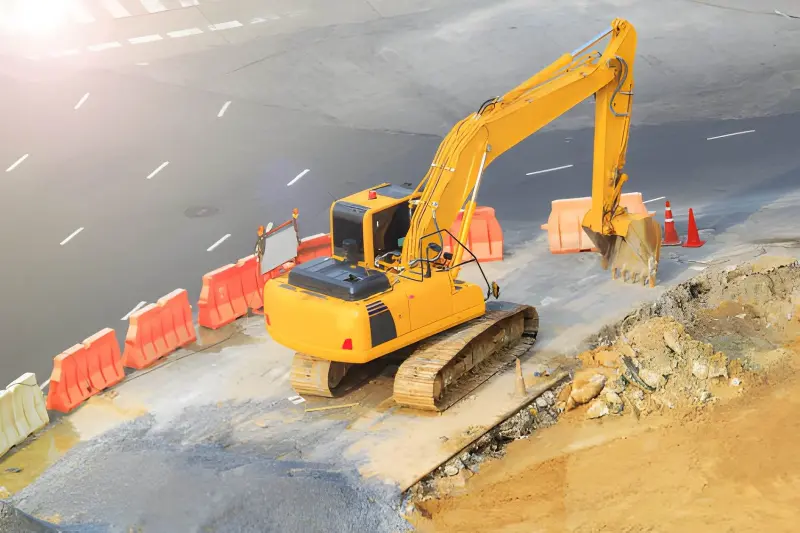
Excavators are the backbone of commercial construction site preparation in Dubai. These versatile machines move massive volumes of earth, precisely dig foundations, trench utilities, and create the level platform every commercial building requires. Yet many contractors underestimate excavator selection, treating it as a simple rental decision rather than a strategic equipment choice that impacts project timeline and budget.
This guide explains how excavators genuinely improve site preparation and foundation work, walks through different excavator types and their specific applications, and provides a practical framework for selecting the right machine for your project’s requirements.
Understanding Why Excavators Matter for Site Preparation
Site preparation accomplishes three critical objectives: clearing the land, establishing proper drainage and grading, and creating a stable platform for foundation work. Excavators execute all three efficiently.
Without excavators, site preparation relies on manual labour and smaller equipment—dramatically extending timelines. A commercial building foundation requiring 800–1,200 cubic metres of excavation could take months with manual methods or smaller machinery. A properly sized excavator completes the same work in 2–4 weeks.
The time difference translates directly to cost. Extended site preparation delays structural work, mechanical installation, and project handover. Every week of delay carries fixed project overhead, labour costs, and financing charges.
Beyond speed, excavators improve quality. Precision excavation maintains proper slope angles, prevents soil destabilization, and creates clean surfaces for foundation work. This precision reduces rework and callbacks—common problems when excavation quality is compromised.
How Excavators Improve Site Clearing and Land Preparation
Bulk Excavation and Volume Movement
Excavators move earth in volume. A 30-tonne excavator with 1.5 cubic metre bucket removes approximately 300–400 cubic metres of soil daily under normal conditions. This speed is impossible to replicate with smaller equipment.
The efficiency compounds. Faster site clearing enables earlier utility installation, electrical infrastructure setup, and logistics planning. Projects waiting for site preparation to finish sit idle. Excavators compress this waiting period.
Precise Grading and Leveling
Commercial building sites require specific slope angles and level surfaces. Too steep a slope creates stability issues. Too flat a surface prevents drainage. Excavators, operated by experienced machine handlers, achieve precise grading that meets project specifications.
This precision matters particularly in Dubai. Sandy soils, high water tables in some locations, and storm drainage requirements demand careful grading. Imprecise site preparation creates drainage problems and foundation stability issues that emerge years after project completion.
Selective Excavation in Constrained Spaces
Many Dubai commercial sites are surrounded by existing buildings, utility lines, and restricted access zones. Standard excavators can’t fit. Compact and mini excavators (6–15 tonnes) solve this problem.
A compact excavator fits through standard building doorways and operates in tight urban locations impossible for larger machinery. Yet it maintains the productivity advantage over manual labour—removing soil efficiently even in confined spaces.
The Role of Excavators in Foundation Preparation
Trench Excavation for Underground Utilities
Before foundation digging begins, underground utilities—water, electrical, telecom—must be located and cleared. Excavators carefully dig service trenches that clear the foundation area of conflicts.
This work requires precision. Utility location errors delay projects. Over-excavation wastes labour. Excavators operated by experienced handlers execute trenching accurately, following marked utility lines and establishing proper trench depths for each service type.
Foundation Pit Excavation
Once utilities are cleared, foundation excavation begins. The excavator digs the main foundation pit to specified depth and dimensions. For commercial buildings in Dubai, depths typically range from 2–4 metres below grade, though high-rise or basement-requiring projects go deeper.
Excavator bucket selection matters here. Standard buckets work for general excavation, but toothed buckets grip rocky soil more effectively. For sandy soil typical in Dubai, standard buckets prevent material loss that can occur with non-toothed designs.
Slope Stability and Side Wall Preparation
Foundation pit side walls must maintain proper angles to prevent collapse. Too vertical and the walls collapse inward. Too sloped and the excavation becomes unnecessarily large.
Experienced excavator operators establish proper slope angles (typically 1.5:1 to 1:1, depending on soil composition) that balance stability and excavation volume. This skill differentiates professional operators from inexperienced handlers.
Basement and Substructure Excavation
Multi-level commercial buildings with basements or underground parking require deeper excavation. Excavators handle these larger-volume tasks efficiently, often requiring weeks of continuous work to complete basement excavation.
The precision becomes even more critical at depth. Utility avoidance becomes more complex. Proper slope maintenance prevents catastrophic collapses. In these scenarios, experienced operators and well-maintained equipment are non-negotiable.
H2: Excavator Types and Their Specific Applications
Standard Hydraulic Excavators (20–30 Tonnes)
These are the workhorse machines on most commercial construction sites. They balance capacity (1.0–1.5 cubic metre buckets), mobility, and cost-effectiveness. A 25-tonne excavator completes most site preparation and foundation work without requiring specialized equipment.
Standard excavators excel at:
- Bulk earth movement (100–400 cubic metres daily)
- Medium-depth trenching (3–4 metres)
- Slope creation and grading
- General site clearing
Best for: 4–8 storey commercial buildings, standard site preparation, projects without severe space constraints.
Large Excavators (40–50+ Tonnes)
These machines handle high-volume work faster. They’re most cost-effective on large sites requiring 2,000+ cubic metres of excavation. Their 2.5–3.0 cubic metre buckets remove material significantly faster than standard machines.
However, larger excavators need adequate site space and stable ground conditions. They’re typically not suitable for urban infill projects or sites with restricted access.
Best for: Large commercial complexes, warehouse construction, high-volume site preparation, industrial facilities.
Compact Excavators (6–15 Tonnes)
Compact machines fit tight spaces impossible for larger equipment. In Dubai’s dense urban locations, compact excavators often prove essential.
The trade-off: slower productivity. Where a standard excavator removes 300–400 cubic metres daily, a compact machine handles 80–150 cubic metres. This reduced productivity is acceptable when space constraints make standard equipment impossible.
Best for: Urban infill projects, interior basement work, utility trenching in confined spaces, finishing work after main excavation.
Long-Reach Excavators
These specialized machines have extended booms reaching 10–12 metres. They’re used for:
- Digging deep trenches without entering the trench
- Excavating from stable ground while reaching lower areas
- Working across water or obstructions
- Removing material from beneath overhanging structures
Best for: Specialty applications, deep trenching, hazardous conditions.
H2: Efficiency Gains and Productivity Improvements
Timeline Compression
This is the most visible benefit. A standard excavator completes month-long site preparation tasks in 2–3 weeks. This compression has cascading benefits—structural work starts earlier, mechanical work begins sooner, and project handover accelerates.
On a 18-month commercial building project, compressing site preparation by 2–3 weeks moves the entire project schedule forward, often reducing total financing costs by 1–2%.
Reduced Manual Labour Requirements
Without excavators, site preparation requires dozens of labourers with hand tools. That workforce costs money, requires supervision, and operates slower. Excavators replace this manual labour with one skilled operator and one support worker—reducing direct labour costs by 60–70%.
Improved Material Reuse and Waste Management
Excavators place excavated soil into trucks or designated areas with precision. Less spillage occurs compared to manual movement. On projects where excavated material is reused for fill or landscaping, this precision reduces waste and material handling costs.
Better Quality and Fewer Rework Issues
Improperly leveled sites, unstable slopes, and drainage problems often emerge from poor excavation quality. Reworking these issues costs thousands—and delays schedules. Professional excavator operation prevents these problems, delivering quality that endures through the project lifecycle.
H2: Safety Advantages of Mechanized Excavation
Reduced Worker Exposure to Hazards
Manual excavation exposes labourers to cave-in risks, equipment interaction hazards, and repetitive strain injuries. Mechanized excavation removes workers from these hazardous environments.
Compliance with Dubai Regulations
Dubai Municipality and DEWA regulations require mechanized excavation for utility work. Manual trenching violates safety standards. Using proper equipment ensures compliance and protects your project from shutdowns.
Operator Certification and Accountability
Excavator operators must hold valid certifications and operate equipment according to safety standards. This requirement creates accountability—trained professionals following established procedures rather than untrained labourers improvising methods.
H2: Cost Considerations and ROI
Excavator Rental Costs
A 25-tonne excavator rents for approximately AED 35,000–50,000 monthly in Dubai. For a 4-week site preparation phase, total cost runs AED 35,000–50,000 plus operator costs.
A 15-person manual labour crew doing equivalent work costs AED 60,000–80,000 monthly. The excavator is cost-competitive while delivering faster results.
Hidden Costs of Delay
Underestimating excavator necessity creates schedule delays that compound. Additional financing costs, extended contractor overhead, and delayed revenue all increase project cost far beyond excavator rental savings.
A 2-week site preparation delay on a AED 50 million commercial building costs approximately AED 250,000–500,000 in additional financing and overhead. Securing proper excavation equipment early prevents this expensive scenario.
When to Rent vs. Perform In-House
Most contractors rent excavators rather than purchase them. Purchase creates capital requirements, ongoing maintenance costs, and storage obligations. Renting provides flexibility without ownership burden.
For contractors running simultaneous multiple projects, ownership might justify economics. For single-project operators, renting is almost always more cost-effective.
H2: Common Mistakes in Excavator Selection and Use
- Undersizing the excavator
Using a 15-tonne excavator for work requiring a 25-tonne machine extends timelines and increases operator fatigue. The 10-tonne undersize costs money through extended rental periods and reduced productivity.
- Overlooking operator expertise
Equipment quality matters less than operator skill. A competent operator on mid-range equipment outperforms an inexperienced operator on premium machinery. Prioritize operator credentials and experience.
- Failing to verify utility locations
Excavators hitting underground utilities create catastrophic outcomes—injuries, project shutdowns, liability. Confirm utility locations (water, electrical, telecom, gas) before excavation begins.
- Ignoring soil conditions
Sandy soils, clay, rock, and contaminated soil all require different excavation approaches. Site investigation before equipment selection prevents selecting unsuitable machinery.
- Neglecting equipment maintenance
Poorly maintained excavators break down mid-project. Confirm your rental agreement defines maintenance responsibility. Daily equipment inspection prevents failures.
- Underestimating excavation volume
Projects running out of excavator time mid-phase indicate volume underestimation. Calculate excavation volume conservatively—factor in soil expansion and waste.
H2: Best Practices for Excavator Operations
Plan excavation work 4–6 weeks in advance. Peak seasons (October–April) create equipment scarcity. Early planning ensures availability.
Conduct site investigation before equipment selection. Soil testing, utility location surveys, and site visits inform proper equipment choice.
Verify operator certifications and experience. Require operators to demonstrate current certifications and previous project experience in similar conditions.
Establish clear safety protocols. Define exclusion zones, equipment positioning, and worker communication systems before work begins.
Schedule daily equipment inspections. Check hydraulics, bucket condition, tracks/wheels, and safety systems daily. Address issues immediately.
Document excavation progress. Track cubic metres removed, depths, and slopes daily. This data confirms compliance with specifications and informs future project estimates.
Coordinate with utilities and other trades. Excavation affects drainage, electrical work, and structural scheduling. Maintain communication with all stakeholders.
Plan material handling. Determine where excavated soil goes (disposal, reuse, stockpiling). Poor planning creates site congestion and inefficiency.
FAQ Section
Q1: How do I know what size excavator I need for my project? Calculate total excavation volume (cubic metres), required excavation depth, and project timeline. A 25-tonne excavator removes 300–400 cubic metres daily. Divide total volume by daily capacity to estimate required duration. Add 20–30% buffer for contingencies. If the timeline compresses too tightly, consider larger equipment or additional machines.
Q2: What’s the difference between a standard and a compact excavator? Standard excavators (20–30 tonnes) offer higher productivity (300–400 cubic metres daily) but require adequate site space. Compact excavators (6–15 tonnes) fit tight urban locations but move less material (80–150 cubic metres daily). Choose based on site constraints and required timeline.
Q3: Can excavators work in Dubai’s sandy soil without special modifications? Yes. Dubai’s sandy soil is actually more excavator-friendly than clay. Standard buckets work effectively. However, ensure proper slope angles (typically steeper in sand) to prevent collapse. Experienced operators familiar with sandy soil conditions optimize approach.
Q4: How long does site preparation typically take with an excavator? Timeline depends on volume and site complexity. A straightforward 1,000-cubic-metre excavation for a standard commercial building takes 3–5 weeks. Projects requiring utility trenching, deep basements, or complex grading take 6–10 weeks. Plan conservatively.
Q5: What happens if an excavator hits an underground utility? This is a serious incident requiring immediate work stoppage. Contact the affected utility company and project engineers. Repairs can cost AED 50,000–200,000+ and delay projects weeks. Prevention (proper utility location surveys before excavation) is essential.
Q6: Do I need different equipment for foundation excavation vs. site clearing? Not necessarily. The same excavator handles both tasks. However, for sites requiring extensive bulk excavation (2,000+ cubic metres), larger equipment for the bulk phase, then smaller equipment for precision foundation work, can optimize overall costs.
Q7: What’s included in an excavator rental agreement? Clarify what’s included: equipment delivery, setup, operator (sometimes), fuel, basic maintenance, and removal. Confirm who handles repairs if equipment breaks down. Understand your liability if damage occurs during operations.
Q8: How weather impacts excavation work in Dubai? Summer heat (May–September) reduces productivity slightly as operators work shorter hours for safety. Winter (October–April) offers optimal conditions. Rain is rare in Dubai but drainage planning remains important. Plan critical excavation during cooler months when possible.
Best Practices Summary
Excavators are the foundation of efficient site preparation. Their impact extends far beyond moving earth—they establish project pace, enable utility coordination, and create stable foundations for everything that follows.
Successful excavation involves:
- Accurate planning (volume calculations, timeline estimation)
- Proper equipment selection (size matched to work requirements)
- Qualified operators (certified, experienced in local conditions)
- Safety compliance (utility location, worker protection)
- Quality documentation (tracking progress and compliance)
These practices separate efficient projects from those that struggle with delays and cost overruns.
Conclusion
Excavators improve site preparation and foundation work by compressing timelines, reducing costs, and establishing quality foundations for commercial construction. The choice between equipment sizes, rental periods, and operator selection significantly impacts project outcomes.
Site preparation isn’t a preliminary inconvenience—it’s a critical project phase deserving strategic planning and proper equipment investment. Contractors who prioritize this phase with adequate resources and experienced operators consistently deliver projects on schedule and within budget.
Foundation work builds on what site preparation establishes. Proper excavation creates stable, well-prepared sites that support all subsequent construction phases. Conversely, rushed or inadequately equipped site preparation creates problems that compound through every subsequent phase.
Plan your excavation work early. Select equipment matching your specific requirements. Prioritize operator experience. These investments in the foundation phase pay dividends throughout the entire project lifecycle.
Ready to plan site preparation for your commercial project? Our team has managed hundreds of excavation projects across Dubai’s diverse site conditions. We understand equipment selection, timeline optimization, and operator coordination that keeps projects on track. [Contact our site preparation specialists] to discuss your project requirements and get a customized excavation plan.